Friday, July 2, 2010

Alzheimer’s Study Quilt Program

A few days ago I received an e-mail from Jeffree Itrich who works with patients in the Alzheimer’s Disease Cooperative Study at the University of California in San Diego.

I am involved in a very special quilt project that is gathering lap-sized quilts for Alzheimer’s research participants. Might you be able to put something on your blog about our project? We are looking for newly made lap-sized quilts. Thank you for whatever you can do.

The Alzheimer's Disease Cooperative Study (ADCS) and the University of California San Diego are able to collect and distribute quilts which brightening the lives of Alzheimer's patients around the nation thanks to a unique donation program.

The Alzheimer’s Study Quilt Program began in late January 2010, jumpstarted by an employee who quilts. The request for needed quilts is then spread via quilting newsletters and blogs.

Communication with Jeffree further defined their definition of lap size. I tend to think of lap size as 40 in X 50 in, but wanted to be sure. Here is the reply I received:

Yes, 40 x 50 or even 35 x 45. Some of our study participants are small women and others are larger men. We’re looking for quilts in all colors so we will have something for everyone. I’ve received a lot of very feminine quilts which I can’t give to men. One woman gave me a very cute quilt made of a fabric featuring old cars. Very cute and very manly.

If you would like to donate a lap-sized quilt to the Alzheimer’s Quilt Study Project, please contact Jeffree Itrich at jitrich@ucsd.edu.

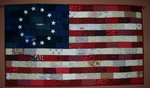
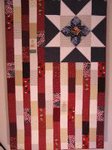
Having just finished this quilt (39 in X 41 in) with no one in particular in mind, I asked if it would be acceptable. The reply was yes, so it is now on it’s way to Ms Itrich to be given to an Alzheimer’s patient.

It is a scrappy serviceable quilt. Both the top and batting layer are pieced to use up scraps. It is machine pieced and quilted.

The next three show some of the fabrics and quilting.


Blue Hawaii Wall Hanging

This is my submission to the ALQS4. It is an Hawaiian appliqué done using the raw edge technique. I machine appliqued and quilted it. It is 20 in square.
The blue indigo was a bandana I found at Hobby Lobby years ago with the intention of making several of the blocks in the book “Hawaiian Quilting” by Elizabeth Root. I used the Angel’s Trumpet block for this wall hanging.
Here is a view of the center.
Here is a view of the back before I sewed on the 4 in sleeve for hanging.

Here are the posts of the quilts made and received from the first three ALQS.
Made:
1st: Laced Ribbons Quilt (went to Pennsylvania, May 2008)
2nd: Flower Basket Quilt (went to Indiana, September 2008)
3rd: Fractures I (went to Australia, June 2009)
Received
1st: I Received My Quilt (from Denver, June 2008)
2nd: It's Arrived! (from Italy, November 23, 2008)
3rd: Geverfde Quilt (from the Netherlands, August 23, 2009)

Thursday, July 1, 2010

Blepharoplasty Complications – an Article Review

Updated 3/2017 -- photos and all links (except to my own posts) removed as many no longer active. 

There is a really nice article in the March 2010 issue of the Journal of Plastic and Reconstructive Surgery which reviews complications of blepharoplasty surgery (full reference below). It is an article worthy of your time if you perform this surgery.
The article divides the complication into time periods which they occur: early (first week), intermediate (1-6 weeks), and late (after 6 weeks). Here is a list of the complications listed and discussed. The information included in my post does not cover all that is covered in the journal article as it is not meant to take the place of the article.
Early Postoperative Period (first week)
Vision Loss
The most feared complication of blepharoplasty is permanent visual loss. The most common cause is retrobulbar hemorrhage, although other causes such as globe perforation, ischemic optic neuropathy, and angle closure glaucoma have been reported.
Retrobulbar Hemorrhage
  • Incidence is 0.05%; associated permanent visual loss was diagnosed in 0.0045%. This corresponds to a one in 2000 risk of hemorrhage and a one in 10,000 risk of permanent visual loss.
  • Most occur within the first 24 hours after surgery (96%), and of these, more than half occur intraoperatively or within the first 6 postoperative hours.
  • The most common presenting symptoms are pain and pressure.
  • Treatment should be aggressive for the first 24 to 48 hours postoperatively, as vision has been reported to return in patients with “no light perception” that was present for 24 hours. (photo credit)
Globe Perforation: Inadvertent globe penetration can result from any periocular procedure. Globe perforation is an ophthalmic emergency and necessitates emergent ophthalmic evaluation.
Central Retinal Artery Occlusion Prompt ophthalmic consultation is necessary.
Corneal Abrasion is generally a rapidly reversible cause of decreased vision. The diagnosis is made by patient symptoms (pain, foreign body sensation, light sensitivity) and is usually apparent immediately after surgery.
Dry Eye Corneal irritation is common after blepharoplasty and symptoms are similar to, but less severe than, an abrasion. These symptoms will respond to ocular lubrication and cool compresses.
Eyelid Hematoma usually develop from bleeding orbicularis oculi muscle. Retrobulbar hemorrhage must be ruled out.
Infection, cellulitis or abscess formation, is exceedingly uncommon in the well-vascularized eyelid, but have been reported and can rarely lead to permanent visual loss or cavernous sinus thrombosis.
Eyelid Sloughing due to eyelid necrosis has been reported and can necessitate multiple eyelid reconstructive procedures
Chemosis or conjunctival edema can develop in the early or intermediate postoperative period as the result of incomplete eyelid closure, ocular allergy, or surgical edema with poor lymphatic drainage.
…………………….
Intermediate Postoperative Period (weeks 1 to 6)
Upper Eyelid Malposition
  • Ptosis can be seen following upper eyelid blepharoplasty. No statistics are available regarding frequency. Mechanical ptosis can result from postoperative edema or ecchymosis and should resolve with conservative treatment, including cool compresses.
  • Lagophthalmos occurs frequently in the postoperative period. Reasons include excessive skin removal, trauma to the orbicularis muscle or peripheral seventh cranial nerve, tethering of the eyelids by sutures or Steri-Strips, and postoperative pain, leading to guarding and incomplete closure. It is usually temporary. Lubrication and lid massage are advisable in the intermediate postoperative period.
Lower Eyelid Malposition is the most commonly reported complication after lower eyelid blepharoplasty. It may range from mild inferior scleral show to severe cicatricial ectropion in 1%. (photo credit)
Corneal Exposure
As in the early postoperative period, keratopathy may persist or become evident during the intermediate period. First-line treatment is expectant, with frequent ocular lubrication and taping. One condition worth mentioning is the patient with undiagnosed thyroid ophthalmopathy who undergoes blepharoplasty that unmasks lid retraction and keratopathy.
Lacrimal System Dysfunction Epiphora can result secondary to dry eye, exposure keratopathy, or an impaired lacrimal pump. Dysfunction usually returns to normal, but extended tearing requires further evaluation for punctal malposition or canalicular damage.
Strabismus and Extraocular Muscle Disorder Diplopia is a rare but potentially disabling complication of blepharoplasty.
Signs that make diplopia less worrisome are preoperative history of strabismus, monocular diplopia that clears with blinking (suggestive of precorneal tear film abnormality), and intermittence.
Persistent binocular diplopia requires additional consideration. In a review of over 900 blepharoplasty procedures, the risk of persistent strabismus was approximately 0.2 percent.
…………………………………….
Late Postoperative Period (after 6 weeks)
Upper Eyelid Malposition
Ptosis If the ptosis was not present preoperatively, then it may be the result of direct trauma to the levator aponeurosis or secondary attenuation from postoperative edema or hematoma. If secondary attenuation has occurred, additional surgery should be delayed until 3 months postoperatively.
Upper Eyelid Retraction and Lagophthalmos
Lagophthalmos in the late postoperative period is the result of excessive skin excision or incorporation of the orbital septum in skin closure resulting in eyelid retraction. If conservative therapy fails or severe exposure keratopathy warrants, surgical correction should be considered.
Lower Eyelid Malposition
Late lower eyelid malposition is complex and requires careful consideration based on anatomical concepts. Identification of the affected lamella (anterior, middle, or posterior), usually the result of deficient tissue or cicatrization, is the key to successful reconstruction. In addition, horizontal laxity must be considered as a potential component of malposition. …………..
Malar Festoons are more likely to occur in patients who are predisposed to fluid accumulations (ie history of thyroid disease, renal failure, sinusitis, allergies). (photo credit)
Patients who are at higher risk should be treated intraoperatively with intravenous steroids. Postoperative oral steroids are useful. Furosemide (Lasix, 20 to 40 mg daily) early in the postoperative course is helpful. Although persistent malar festoons can be excised, the success rate is low. If the underlying condition is systemic, eyelid surgery cannot locally correct the problem.
Dry Eye Syndrome
True dry eye disease in a postblepharoplasty patient can only be diagnosed after ample time has been allowed for resolution of common early and intermediate sicca symptoms. …...
Initial treatment of dry eye consists of ocular lubrication. Treatment failure should prompt ophthalmologic examination, with consideration of antiinflammatory eyedrops (such as topical cyclosporine) or punctal occlusion.
REFERENCES
Blepharoplasty Complications; Lelli, Gary J. Jr; Lisman, Richard D.; Plastic and Reconstructive Surgery. 125(3):1007-1017, March 2010; doi: 10.1097/PRS.0b013e3181ce17e8
Minor Complications after Blepharoplasty: Dry Eyes, Chemosis, Granulomas, Ptosis, and Scleral Show; Pacella, Salvatore J.; Codner, Mark A.; Plastic and Reconstructive Surgery. 125(2):709-718, February 2010; doi: 10.1097/PRS.0b013e3181c830c7

Wednesday, June 30, 2010

Fireworks Safety

 Updated 3/2017 -- photos and all links (except to my own posts) removed as many no longer active.

Time for a reminder of safe firework use.  This Daily News article by Lauren Johnston -- Doctors replace woman's missing thumb with big toe transplant – shows and tells you why.
A Long Island woman's big toe will adapt to function as a thumb after doctors performed a rare transplant operation to replace the vital missing digit.
Shannon Elliott, 25, lost the thumb and two fingers from her left hand in November when a firework exploded in her palm. …….

I hope you will all have a safe and happy July 4th.  Be safe and stay out of the ER.
Please use the following tips:
  • Never allow children to play with or ignite fireworks.
  • Read and follow all warnings and instructions.
  • Fireworks should be unpacked from any paper packing out-of-doors and away from any open flames.
  • Be sure other people are out-of-range before lighting fireworks. Small children should be kept a safe distance from the fireworks; older children that use fireworks need to be carefully supervised.
  • Do not smoke when handling any type of "live" firecracker, rocket, or aerial display.
  • Keep all fireworks away from any flammable liquids, dry grassy areas, or open bonfires.
  • Keep a bucket of water or working garden hose nearby in case of a malfunction or fire.
  • Take note of any sudden wind change that could cause sparks or debris to fall on a car, house, or person.
  • Never attempt to pick up and relight a "fizzled" firework device that has failed to light or "go off"
  • Do not use any aluminum or metal soda/beer can or glass bottle to stage or hold fireworks before lighting.
  • Do not use any tightly closed container for these lighted devices to add to the exploding effect or to increase noise.
  • Never attempt to make your own exploding device from raw gunpowder or similar flammable substance. The results are too unpredictable.
  • Never use mail-order fireworks kits. These do-it-yourself kits are simply unsafe.
If you need more information on the injuries that can occur, check out these sites:
Fireworks Related Injuries by the CDC
Prevent Blindness America

Tuesday, June 29, 2010

Shout Outs

Updated 3/2017 -- photos and all links (except to my own posts) removed as many no longer active. 

Dr. Elaine Schattner of Medical Lessons is the host for this week’s Grand Rounds. It’s the “customer service in healthcare” edition. You can read this week’s edition here.
Learning about medicine is a lifelong endeavor whether you’re a patient, a doctor, a caregiver, a hospital administrator or, perhaps, even an insurance company executive. In today’s Grand Rounds, we’ve an array of eleven perspectives that, directly or indirectly, bear on the suggested theme of education.
If there’s a motif that emerged unsolicited this week, it’s empathy, a term highlighted in the titles of two submitted posts:
In Glass Hospital, Dr. John Schumann considers what motivates health care workers in a thoughtful post, Finding Empathy. Schumann, an internist and medical educator at the University of Chicago, suggests that doctors and nurses need to re-encounter and re-engage with empathy to continually find meaning in their work………
……………………………………….
Keith, Digital Doorway, is the host of the latest edition of Change of Shift (Vol 4, No 26) !   You can find the schedule and the COS archives at Emergiblog. (photo credit)
Well, after a long hiatus, I'm finally hosting Change of Shift once again, and I'm happy to do so from the comfort of our new home here in Santa Fe, New Mexico! (For those of you unfamiliar with Change of Shift, it is a nursing blog carnival wherein nurses from around the blogosphere are featured in an "online magazine" that is hosted on a different nursing blog every two weeks.)
……………………………….
A truly heartwarming story from CNN:  Soprano serenades doctors after lung transplant by Ashley Fantz.
Charity Tillemann-Dick,  27, had a bilateral lung transplant done at Cleveland Clinic in September 2009.  She had been diagnosed with Idiopathic Pulmonary Hypertension in 2004.  What a beautiful voice!
………………………..
Jill of All Trades, MD has written a  wonderful post -- 5 “Bueno” Tips on How to Learn Medical Spanish.  She shares how she did so:
…….Thankfully, and perhaps somewhat miraculously, I now very rarely need an interpreter. Seriously, I think the last time I used one was “meses” (months) ago. I cannot even remember when.
So “como” (how) did I do it? Here’s my advice:
1. Find a good medical Spanish book: There are not that many. Buy the best one. And read the entire thing, word-for-word. Underline as you go. Then, re-read the underlined items from the first round. ……….
……………………………..
Jeffrey Parks, MD, otherwise known as Buckeye Surgeon, has written a warning post which you should all read:  What Does Dave Weigel have to do with Sermo?
…….Someone read the post and decided to break protocol. Ultimately, several of his off the record email posts were published for the general public on both the Daily Caller and FishbowlDC. Weigel subsequently resigned his position as a writer/blogger for the Washington Post………
What if someone obtained access to Sermo for nefarious purposes? Perhaps a physician-turned-hospital administrator who went looking for dirt on a trouble-making internist. Or a malpractice attorney who used his brother-in-law's log-on ID to troll for cases……….
………………………………….
I read about Dawn Warmbold recycling plastic bags into sleeping mats for the homeless in my local paper, but their online access is by subscription only.  Fortunately, I found a similar article in the Log Cabin Democrat:  ‘Sleeping mat-ters’ to local group
……..Warmbold has personally created 40 mats and instructed several church groups and organizations on how to create the mats. “The word is spreading like wildfire,” Warmbold said. “The homeless have asked us not to stop making them. There are more homeless than mats to hand out. That’s how much in demand they are.”
Warmbold, also called “the bag lady” has been teaching others how to carry the torch and encouraging them to create circles of their own to produce mats. She created an instructional Youtube video, which has received more than 2,500 views.
The video can be viewed by going to Warmbold’s channel at www.youtube.com/user/dawnw4848.
………………………………..

Dr Anonymous’ BTR show will be on summer break until late August.

Upcoming shows (9pm ET)
Jul-Aug: Summer Break
8/26: Dr. A Show 3rd Anniversary

Monday, June 28, 2010

Pre-Hospital Surgical Prep

 Updated 3/2017 --  all links (except to my own posts) removed as many no longer active.

The June 2010 issue of the Surgical Products magazine has an article by Amanda McGowan focusing on the prep in preventing surgical site infections – Preventing SSI: It Starts in the Prep.

What really caught my attention was the pre-hospital prep described for one hospital.  Currently, (as most of my patients exhibit good hygiene) I haven’t begun anything more than taking a shower (with basic soap), washing their hair, and brushing their teeth pre-op.  My SSI rate is less than 0.5% over 20 years.  The bold is my emphasis.
As Beth Beck, director of infection prevention and control/employee health at Springhill Medical Center in Mobile, AL, explains, her facility follows specific steps in the prep process to help reduce infection risk.
“We ask the surgeons to have the patients bathe with chlorhexidine the night before,” she says.
“Then, once they arrive to the hospital, we wipe them down with a CHG-impregnated cloth and we instruct patients to brush their teeth twice. We have them rinse with a CHG oral rinse. Then, we give them skin and nasal antiseptic.”
Now remember this is a surgical products magazine, so the focus on the article may be to sell me the skin and nasal antiseptic product which the article mentions is marketed by 3M and is meant to reduce Staphylococcus aureus (Staph aureus) colonization, a leading cause of SSI.
The article quotes Joe Gillis, marketing manager for the skin and nasal antiseptic product at 3M:
According to Gillis, approximately thirty percent of surgical patients today are colonized with Staph aureus in the nares. In turn, a study published in The Lancet in 2004 revealed that eighty percent of Staph aureus infections are caused by the patient’s own nasal flora. Additionally, one percent of the surgical population carries methicillan-resistant Staphylococcus aureus (MRSA).
The article goes on to explain that Beck’s facility is in the trial phase of using the skin and nasal antiseptic product on orthopedic patients who are undergoing an operation involving implants.  The hospital added the nasal antiseptic part of the routine after seeing an increase in surgical site infections in orthopedic patients.
What is your or your hospital’s routine “prep before the prep?”

Recommended:
How-to Guide: Prevent Surgical Site Infection
How-to Guide: Reduce Surgical Complications

Saturday, June 26, 2010

My Dog Hair Shawl

 Updated 3/2017 -- all links (except to my own posts) removed as many no longer active.

Early in my blogging life I wrote a post called: Hair of the Dog (May 28, 2007). Here it is followed by more of the story and photos of my dog hair shawl.
……………………..
It will have been 4 years on May 30th since Ladybug was euthanized. She had osteosarcoma of the left maxilla. And no that isn't a cigar in her mouth. It's a rolled up rawhide treat. Ladybug was half-Rottweiler and half-Pyrenees. She was nearly 8 years old when she died. She was a charmer! She would sit with her hunches on the sofa and her front legs on the floor. She is missed.
The origins of the phrase "hair of the dog" seem to go back to "the Romans and many ancient peoples before them believed that like cures like. They would bind the hairs of a dog that had bitten someone to that very person's wound to make it heal better EVEN of the dog was rabid." It then morphed into referring to handover cures (no "hair" included in these).
Another use for the hair of your dog is to make something from it. Depending on your own dogs breed (and the Pyrenees is perfect), your dog may have wonderfully full, soft hair. Years ago while walking through 'Books-a-Million', a book caught my eye. The book was "Knitting with Dog Hair" by Kendall Crolius. It described the steps needed (comb and keep the hair in a dry paper bag until you have enough, spin into yard, and then knit). VIP Fibers provides the service of preparing the hair after you collect it. I saved the hair from Ladybug and my two Labradors, Girlfriend and Columbo (who died in November 2003 from an abdominal cancer at age 11). I have a lace shawl from their hair. It feels like mohair.
………………………….
A short time ago, Dr. Smak uploaded a photo of the front of the "Knitting with Dog Hair" on Facebook which sparked two conversations. One on her post and another on the photo of my shawl I uploaded to show to her. So here is more of the story of my dog hair shawl.
Ladybug followed Columbo, Girlfriend, and I home one winter day in 1996 after finding us on our walk in the woods. We tracked down her owner who didn’t want her back. Ladybug was about 6 months old at the time and was still growing. She had outgrown her “cuteness” as a really small puppy. She ended up being a large 80-90 lb dog, but just as sweet as could be and a leaner (I loved that).
In the spring she would “spit” clumps of her undercoat as the weather got warmer. Girlfriend, a long haired Labrador, did the same to a much less extent. These clumps were very soft. I happened upon the book around the same time. I was a very basic knitter, had never processed wool, and knew nothing about spinning. Undeterred, I began to collect their hair. I saved only the hair brushed from them in the recent days after bathing them.
Once I collected half of a large paper bag full, I began a search for wool to mix it with as instructed in the book. I found a small yarn shop in Conway, Arkansas – Fiberworks. I bought some raw black wool (do not remember the type). This was in the spring of 2000.
I then searched the internet for someone to process the wool. I sent it to Ohio Valley Natural Fibers. I bought a drop spindle and took a spinning class to learn how to spin my wool. It did not work out. I wanted lace weight so I could have a shawl. Mine was more worsted weight and I was SLOW.
A nurse friend who circulated in the operating room said she would spin it for me. I offered to pay her which she refused. It turned out, she didn’t have the time to do it. So a couple of years after Ladybug and Columbo had died (they both died in 2003), I go up the nerve to ask for my dog hair/wool back.
I then searched the internet and found VIP Fibers . My old check as payment to them is dated April 2006. I got back --------- skeins with these wonderful labels.
During the intervening years, I had purchased a book titled "Shawls and Scarves" edited by Nancy Thomas. I made three shawls to learn how to do lace knitting, preparing for the time I had my dog hair yarn to use.
For my dog hair shawl I used the “lace dream” pattern by Eugen Beugler in the book. Here is a photo after re-blocking it.  It also shows the true color better than the one above.

Here is a close shot to try to show some of the detail.

Friday, June 25, 2010

Confetti for C Quilt

This quilt was made for J’s sister C.  It is made of bright colors to reflect her personality.  The block is “puss-in-the-corner.”  I began with some left-over blocks from Bud’s quilt and added greens, blues, and purples to the reds, oranges, and yellows.  It is machine pieced and quilted.  It measures 42 in X 54 in.
This photo shows some of the quilting and fabrics.
The back is a white muslin.  I wish the quilting showed better as the back is lovely.

Thursday, June 24, 2010

Tips for Using Self-Tanners

Updated 3/2017 -- all links (except to my own posts) removed as many no longer active. 

Your doctor has told you not to use tanning beds any more.  Your skin is beginning to show more aging than your age should have.  You have a family history of skin cancer and want to avoid it.  Whatever your reason, you have decided to look at self-tanners as an alternative.
I applaud that decision, but remember to use safe sun practices and/or sunscreens as self-tanners offer no protection to your skin from UVA or UVB rays.
…………………..
According to About.com:Chemistry, self-tanners have been around in some form since 1960. 
In 1960, Coppertone introduced its first sunless tanning product - QT® or Quick Tanning Lotion. This lotion produced an overall orange effect. Today's sunless tanning products produce much more realistic results.
Bronzers
  • Cosmetic bronzers produce immediate effects that can be easily removed with soap and water. Bronzers are available as powders, creams, and lotions.  Only lasts until it is washed off.
Sunless Tanning Lotions and Sprays
  • Most sunless tanning products are lotions and sprays containing dihydroxyacetone (DHA) as the active ingredient. DHA is a colorless sugar that interacts with the dead cells located in the upper layer of the epidermis. This interaction is why exfoliation of “clumps” of dead skin cells is so important in getting an even color. This change usually lasts about five to seven days from the initial application.
The magazine Elle has a nice article which offers this advise for choosing the product to use:
Locke says choosing the right formula also determines how your tan will appear. “Go with a reputable brand, one that uses a lower percentage of DHA so that you can build your color accordingly,” she says.
Bronze-seekers should also go for products infused with erythrulose, a sugar sourced from raspberries. The combination of DHA and erythrulose in a sunless tanning product is believed to yield longer-lasting, cosmetically pleasing color.
Some self-tanners, like those found in the St. Tropez collection, also contain green pigment to help counteract any orange.
………………….
Give yourself plenty of time, this is not something that should be rushed or can be done in 15 minutes:  “it will be around two hours before you can put on "street clothes" and go somewhere.” 
What will you need to have handy?
You will need a place to take a shower or bath, a cotton washcloth to exfoliate your skin, soap, skin lotion, self tanner, facilities to wash your hands frequently, a band or tie to keep hair off of your face, and a fingernail scrub brush.
If you are going to apply self tanner to your back, make sure you have a sponge paintbrush (the three inch size is good) with a handle of three inches or more. You may also want a loose outfit, such as a robe, to wear while the self tanner is drying. It's also good to have a watch or clock around.

Before applying the self-tanning product, it is import to do proper skin-prep.  Your skin needs to be clean and freshly exfoliated.
Go for a scrub that is gentle (think spherical, man-made beads over granular ones with uneven edges) to avoid irritating the skin prior to tanning. The ideal scrub should also be oil-free (“an oil-based polish can act as a barrier between the self-tanner and top layer of the skin,” says Locke). When in a bind, using a loofah or muslin cloth with water will do the trick too.
…………….
using the cotton washcloth to remove dead and dry skin by rubbing your skin gently in a circular motion. Pay particular attention to the lower half of your legs, knees, ankles, tops of feet, and elbows. …
Important: Do not shave your legs if your skin is at all sensitive.
Next, apply a light layer of moisturizer to your skin, especially the areas like the elbows, hands, feet, ankles, and knees.
Time to apply to self tanner
  • Take a look at the clock and note the time.
  • Start with your legs and work your way upwards doing the face and neck last.
  • Apply quickly but thoroughly, spreading in a circular motion to avoid streaking, being careful not to miss any areas.
  • In most areas apply the self tanner a little more heavily than you would apply ordinary lotion.  Exceptions: Do not apply it directly to your toes, your heels, or the sides of your feet.  The face and neck areas take the self tanner well, so apply sparingly. Don't forget to apply it behind your ears.
  • Wash both of your hands thoroughly every 5 minutes to avoid getting color in your palm and between the fingers.  Don’t forget to use the nail scrub brush.
  • Next comes your torso and arms.  Use the sponge paint brush to apply self tanner to your back. Don't forget under your arms and the sides of your torso.
  • Wash your hands again being careful not to splash water on any of the areas you wish to be tanned.
  • Now you have entered the drying zone.  After 15 minutes (preferably 30 minutes), you can put on a loose nightgown or Mumu to wear while you continue to dry. 
  • Avoid exercise or anything that will make you sweat for one hour.
To maintaining your tan, you will need to reapply self tanner every three days.
…………………….
From the WebMD article come these suggested self-tanners:
Banana Boat Summer Color Self-Tanning Lotion ($6.99)
L'Oréal Sublime Glow Daily Moisturizer ($11).
Neutrogena MicroMist Airbrush Sunless Tan spray ($11.99).
Clarins Liquid Bronze Self Tanning ($32.50)
Sally Hansen Airbrush Sun ($9.95)
Estée Lauder Bronze Goddess Golden Perfection Self-Tanning Lotion for Face ($22.50)
California Tan Tinted Self Tanner Lotion ($27)


Sources
Summer Glow: Best Self-Tanner Tips (May 2010); Elle
Sunless.com (source for tips on application, products, feedback)
You Asked! Expert A's to Your Beauty Q's About Self Tanners; WebMD Magazine, June 2010

Wednesday, June 23, 2010

Acute Hematoma Seven Years Postop – an Article Review

 Updated 3/2017 -- photos and all links (except to my own posts) removed as many no longer active.

There is a unique case presented in the Canadian Journal of Plastic Surgery of an acute, symptomatic hematoma occurring 7 years postoperatively.  Most unique is the well defined mechanism of injury which caused the hematoma.
For background, the article reminds us that hematoma formation is a complication of augmentation mammoplasty whether for cosmetic or reconstructive purposes.  Most of these will occur in the immediate postoperative period.  The incidence is reported to range from 2-10.3% in this immediate postoperative period.
In their review of the literature, the authors found only 20 cases reported to have occurred in the late postoperative period.  Most of these cases did not have a definitive mechanism of injury or develop symptoms immediately after the triggering event.
In contrast, their patient presented with both a known and traceable cause of her bleed and with symptoms that developed immediately after the initial event.
The patient was a 53 year old female who had undergone a right mastectomy with reconstruction using a saline implant seven years previous to this injury. 
The patient reported having right breast soreness after performing vigorous stretching exercises.  The following morning, she noted increased pain and bruising over the medial aspect of the breast.  She underwent right breast ultrasound in the clinic that demonstrated a small fluid collection between the anterior surface of the implant and the overlying tissue, which was of unclear consistency…..A magnetic resonance imaging scan confirmed both intracapsular and extracapsular hemorrhage.
The patient was taken to the operating room; on entering the capsule, a pool of dark red blood was visualized and 200 ml of clot was removed…..

Interesting case review.


REFERENCE
Acute symptomatic hematoma with defined etiology seven years after breast reconstruction: A case report and literature review;
Canadian Journal of Plastic Surgery, Summer 2010, Volume 18 Issue 2: e 27-e 29; AK Seth, JY Kim
Late Hematoma after Augmentation Mammaplasty Apparently Due to Myoelectrostimulation; Cagli, Barbara; Vulcano, Ettore; Marangi, Giovanni Francesco; Cogliandro, Annalisa; Persichetti, Paolo; Plastic and Reconstructive Surgery. 119(1):439-440, January 2007; doi: 10.1097/01.prs.0000233618.94269.d4
Local Complications after Cosmetic Breast Augmentation: Results from the Danish Registry for Plastic Surgery of the Breast; Hvilsom, Gitte B.; Hölmich, Lisbet R.; Henriksen, Trine F.; Lipworth, Loren; McLaughlin, Joseph K.; Friis, Søren; Plastic and Reconstructive Surgery. 124(3):919-925, September 2009; doi: 10.1097/PRS.0b013e3181b0389e

Tuesday, June 22, 2010

Shout Outs

Updated 3/2017 -- photos and all links (except to my own posts) removed as many no longer active. 

Debra Gordon, A Medical Writer’s Musings, is the host for this week’s Grand Rounds. It’s the “customer service in healthcare” edition. You can read this week’s edition here.
I want to start this week's Grand Rounds' blog with my own blog post. I asked for postings on customer service and I have one to share. My 17-year-old son has been having some issues with depression and social anxiety. We got him in to see a therapist and his family practitioner prescribed a low dose of Prozac, both of which seemed to be helping until he hit a crisis when his girlfriend broke up with him. He literally fell apart and scared us to death.
His therapist called me back the night of the crisis within 5 minutes of my leaving a message with the answering service. He was only in town for a week before leaving for vacation, but he saw our son twice and called our son's primary care doctor to suggest upping the antidepressant dose. The doctor called me one evening to say she totally concurred and, since our son's therapist would be out of town the following week, wanted to see our son herself.
I was so touched…………….
……………………………………….
A nice CBC News article featuring @globalsurgeon on maternal health:  Africa and the surgical imbalance by Nick Czernkovich.
I met Adam in the Democratic Republic of Congo. He was born by cesarean section and then, a few months later, he was back at hospital for emergency stomach surgery. At the age of 23, he again found himself under the knife for an appendectomy.
Adam is one of the lucky ones. Born and raised in the U.S., he had access to these relatively basic but life-saving surgeries without which he — and his mother — would probably not have survived.
Now 44, Dr. Adam Kushner is a certified general surgeon, but the small miracles of his early surgical encounters have not been lost on him.
Dr. Adam Kushner in Masisi, DRC, in April 2010. (Nick Czernkovich/CBC)
When I met him he was working for Doctors Without Borders in a rural hospital in the town of Masisi in North Kivu province, one of the most troubled in the eastern Congo…………….
……………………………….
OncRN, an oncology nurse, has written a lovely post on saying good-bye to our patients:
you care for a patient for months, maybe years.
eventually the end comes…….
this line of work is littered with or decorated by (depending on your state of mind) many, many good-byes
this variety is uniquely emotional and complicated because our language and/or culture is sorely lacking in words appropriate for such a send off.
i'm sorry? godspeed? farewell? stay in touch? - nothing quite works.
anything, though, to avoid the ubiquitous 'take care'.…
you wish you could turn it over to your son……….
……………………………………
Dr. Rob set up a blog for Zippy a few years ago to raise money for research for childhood brain cancer. It was/is a tribute to Dr. Smak’s son who was diagnosed with brain cancer and lost his fight. Initially, there was much giving. I even made a quilt which we auctioned off for the cause.
Zippy has recently been in New York with Intueri who is a wonderful writer. I hope you will check out her reports of Zippy’s adventures and consider making a donation.
Introducing Zippy.
Zippy Goes to Times Square.
Zippy Goes to Wall Street.
Zippy Goes to Bryant Park.
Zippy Looks at the New York City Skyline.
Zippy Goes to Central Park.
…………………………………….
Discovered a “new to me” dermatology blog:  Only the Best Skin Care Advice Blog via a comment on my blog post yesterday by the author, Dr. Cynthia Bailey.   Check out her recent post:   Cracked, Dry, Brittle and Splitting Fingernails; Dermatologist’s Tips
THE PROBLEM:
Your nails dry out as you age, losing their natural oils which act as a glue to hold the nail layers together. If you have thin fingernails and dry skin to begin with you can expect this to happen to you ‘sooner rather than later’. 
Exposing your hands to harsh soaps, cleaning products, solvents and rough work makes things worse. At first your nails begin to ‘fray’ on the edges, becoming brittle. Eventually the layers split. 
Nail hardeners make this worse because the alcohols, formaldehyde and other chemicals in the nail hardeners really dry out your natural oils. (Crazy fact: Nail hardeners actually contain more of these chemicals than nail polishes!  It’s these chemicals that make the nails feel harder at first, but- whammo- after a few weeks the splitting is worse than ever.)
THE FIX:……………….
……………………………………….
This past weekend I made another messenger bag. This one using old cargo pants, making good use of two of the great pockets.


   ……………………………..

Dr Anonymous’ BTR show guest this week will be Dr. Bryan Vartabedian, 33 Charts. The show begins at 9 pm ET.

Upcoming shows (9pm ET)

Monday, June 21, 2010

Cowden Syndrome and Breast Cancer

Updated 3/2017 -- all links (except to my own posts) removed as many no longer active. 

I was unaware of Cowden Syndrome prior to seeing the article (full reference below) mentioned in my MDLinx Plastic/Reconstructive Surgery weekly update.  I went looking for more information.
According to Genetics Home Reference website:
Cowden syndrome is a rare disorder characterized by multiple noncancerous, tumor-like growths called hamartomas and an increased risk of developing certain cancers.
Almost everyone with Cowden syndrome develops hamartomas. These growths are most commonly found on the skin and mucous membranes (such as the lining of the mouth and nose), but can also occur in the intestinal tract and other parts of the body. Abnormal growths on the skin and mucous membranes typically appear by a person's late twenties.
People with Cowden syndrome have an increased risk of developing several types of cancer, including cancers of the breast, thyroid, and the lining of the uterus (the endometrium). Noncancerous breast and thyroid diseases are also common. Other signs and symptoms of Cowden syndrome can include an enlarged head (macrocephaly); a rare, noncancerous brain tumor called Lhermitte-Duclos disease; and intellectual disability.
How common is Cowden syndrome?
Researchers estimate that Cowden syndrome affects about 1 in 200,000 people; however, the exact prevalence of this condition is unknown because it can be difficult to diagnose.
It’s the increased risk of cancers in the breast that was the focus of the Journal of Plastic, Reconstructive & Aesthetic Surgery article.  It was for this reason that their 3 case report patients had prophylactic mastectomies with reconstruction. 
According to the eMedicine article:
Carcinoma of the breast occurs in 20-36% of female patients and is one of the most serious consequences of Cowden disease (multiple hamartoma syndrome). Carcinoma of the breast also has been reported in 2 men with Cowden disease (multiple hamartoma syndrome).  Fibrocystic disease and fibroadenomas are present in approximately 75% of patients.
And from the University of Iowa patient guide:
Of all the women diagnosed with CS, 30 to 50 percent of patients will develop breast cancer and 50 to 70 percent of patients will not develop breast cancer. The average age of breast cancer in women with CS is 38 years; however, cancer has been reported in patients ranging from 14 to 65 years of age. Women are also at increased risk for other benign breast conditions, such as ductal hyperplasia, intraductal papillomatosis, lobular hypertrophy, fibrocystic breast disease, or fibroadenomas.
Although the risks are lower, men with CS also have an increased risk for developing breast cancer. However, the degree of risk for breast cancer in men is unknown.


REFERENCES
Cowden syndrome and reconstructive breast surgery: Case reports and review of the literature; E. Ali, P.G. Athanasopoulos, P. Forouhi, C.M. Malata; Journal of Plastic, Reconstructive & Aesthetic Surgery - 07 June 2010 (10.1016/j.bjps.2010.04.047)
Cowen Syndrome – Genetics Home Reference, A service of the U.S. National Library of Medicine®
Cowden Disease (Multiple Hamartoma Syndrome); eMedicine article, April 26, 2010; Kendall Adkisson, MD, Katherine H Fiala, MD
Cowden Syndrome: A Guide for patients and their families; April 2002; University of Iowa Hospitals and Clinics