
Showing posts with label photography. Show all posts

Tuesday, January 3, 2012

Shout Outs

Updated 3/2017--photos and all links removed as many no longer active. 

Peggy (@tbtam), TBTAM, is this week’s host of Grand Rounds.  You can read this week’s twitter edition here. 
ONCE UPON  TIME…
Before Facebook and Twitter and Google+, and long before the word “social media” became religion, something called the Medical Blogging made its appearance on the world-wide web.
In those days, there was a small, close-knit community of medical bloggers ……..
………………………..
H/T @jilltomlinson  for the link to this Lost Angeles, CA blog post which gives a great viewpoint on disfigurement, identity, perception & reconstructive surgery.  It is from December 2010 but worth the read:  MIRRORINGS: The late great Lucy Grealy on her face, tragedy, beauty and identity
There was a long period of time, almost a year, during which I never looked in a mirror. It wasn’t easy, for I’d never suspected just how omnipresent are our own images. I began by merely avoiding mirrors, but by the end of the year I found myself with an acute knowledge of the reflected image,  …….
Long-term plastic surgery is not like in the movies. There is no one single operation that will change everything, and there is certainly no slow unwrapping of the gauze in order to view the final, remarkable result………
…………………….
Medpage Today’s article by Michael Smith, Face Transplants Offer High Yield With One Procedure:
Despite enormous complexity, full-face transplants can repair functional defects and improve major surface deficits that would otherwise take multiple reconstructive procedures if they were possible to do at all, researchers reported.
That conclusion comes in a report, online in the New England Journal of Medicine, on three full-face procedures carried out this year at Brigham and Women's Hospital in Boston…….
The NEJM article:  Pomahac B, et al "Three patients with full facial transplantation" N Engl J Med 2011.
………………….
H/T to @jordangrumet for the heads up on a new blog by @WilliamDale_MD.  The blog is entitled WilliamDaleMD.  His nice first post is Medical Health Record:  a Personal Journey Down the Rabbit Hole
The Problem
“They told me I had to get the information myself,” she said.
“What? Why?”  I responded, annoyed.
“They said it wasn’t in their computer, and that I’d have to get it myself. They said since you’re a doctor here, you could easily check the computer yourself and get it from medical records,” my wife continued.
“That’s crazy! I’m not allowed to look at the computer records; I could lose my job!  And it’s much easier for them to get the paper records than me! ” I was incensed.…………….
………………………..
From DinoDoc, Musings of a Dinosaur , comes a thoughtful post:  In the Trenches: Quality of Life
Why is it easier to talk about quality of life with patients who are dying? Why don’t we factor these considerations into the decision-making for patients with conditions that aren’t fatal?
The presence of a terminal illness serves to focus everyone’s attentions. Widespread cancer metastases? Concerns about tight blood glucose control fade away. End-stage liver disease? Blood pressure control doesn’t matter so much any more. Bony pain from prostate cancer? Narcotic and sleeping pill addiction doesn’t even occur to anyone. …….
……………………….
H/T to @tbtam for this tweet:  “The year in street photography wp.me/p1Gna5-gh via @wordpressdotcom A young photographer hones her craft. I envy her.”  So do I.  Please check out her photography (better on a screen larger than your iPhone).
………………………….
A couple of weeks ago CBS Sunday Morning had a nice feature segment on the art of shopping bags.   Check this out:  The Museum of Bags

Tuesday, June 7, 2011

Shout Outs

 Updated 3/2017:  all links removed as many no longer active and it was easier than going through each one.

Grand Rounds continues to be on hiatus.  If you would like to host a future edition of Grand Rounds send an email to Nick Genes (you can find his contact info at here).   The most recent edition can be found here at Medgadget.  Other editions can be found here on the Grand Rounds Facebook page.
……………………………
Kim, Emergiblog, is the host of the latest edition of Change of Shift (May 2011)! You can find the schedule and the COS archives at Emergiblog.
Welcome to the latest edition of Change of Shift, the nursing blog carnival!
…..Let’s get started!
**********
Sue Hassmiller is the Robert Wood Johnson Foundation Senior Advisor for Nursing. She is also a volunteer with the Red Cross. Abandonment Guilt, her final blog post from tornado-ravaged Alabama, can be found at AJN’s Off the Charts.
Best. Post. EVER! From BabyRNDeb at Life and Times of an L&D Nurse. What a difference One Year can make!
Over at oncRN, “the silence needs to be listened to and honored.”   …….
………………………………..
H/T to @palmd  for the link to this article by  @stevesilberman:  23 amazing writers offer me tips on writing a book.  Here are just a few:
Bill Wasik (Author of And Then There’s This: How Stories Live and Die in Viral Culture) --
The first tip is that readers expect books to be exhaustive on their subjects. That doesn’t mean they want the books to be long ….
Deborah Blum (Author of The Poisoner’s Handbook and Ghost Hunters)  -- …..the best advice i got in writing narrative non-fiction was to get my hero in trouble and keep him there. …..
Sylvia Boorstein (Author of Happiness is An Inside Job and It’s Easier Than You Think)  -- …..Do not read other people’s work on the same subject. That might be hard for you, since you are collecting research data, but I say very little about what other people have said or thought. They’ve already said or thought it. ….
……………………………….
Kerri (@sixuntilme)  who will soon be a 25 year Medalist shares a Video from the Joslin 50 Yr Medalists.   Amazing and inspiring.  Go check it out.
To be a Joslin Medalist, you need to mark 25, 50, or 75 years with diabetes.  (Well, technically, you get a certificate at the 25 year mark, but it's definitely a milestone to celebrate.)  And over the weekend, I had the opportunity to spend the day with Joslin's medalists who have spent over 50 years with type 1 diabetes. 
……  These generous medalists allowed me to listen to their stories, and offered a few sage words of advice into my video camera. …..
…………………………………….
Not only is this year the 30th Anniversary of HIV/AIDS, but Margaret Polaneczky, MD (TBTAM) reminds us it’s also the 40th anniversary of the seminal journal article on DES – An Endocrine Disruptor
An interesting NEJM article on the 40th anniversary of the seminal journal article on The DES Story serves as a potent reminder of the potential effects of exposure to endocrine disruptors during critical times in development.
Beginning in the early 1960′s DES, a synthetic estrogen compound, was given to women in early pregnancy to prevent miscarriages. Females born from these pregnancies had an increased risk of a rare vaginal cancer during childhood, increased rates of uterine malformations that can cause infertility and premature birth, and are at a moderately higher risk for breast cancer. Use of DES in pregnant women stopped in the early 1970′s.  . ……….
…………………………….
What great news this week regarding the treatment of melanoma.  Check out this NY Times article by Andrew Pollack:  Drugs Show Promise Slowing Advanced Melanoma
Two new drugs have been found to prolong the lives of people with advanced melanoma, representing what researchers say is notable progress against the deadly skin cancer after decades of futility.
The drugs represent success in two new approaches to combating cancer: one by attacking a specific genetic mutation that accelerates tumor growth; the other by unleashing the body’s immune system to fight the disease  ……….
The drugs do not cure melanoma, except perhaps in rare cases.   …………
…………………….
Shared by @DrVes on twitter:  The days of his life: NY photographer takes Polaroid picture every day for 18 yrs until his death from cancer at 41 (photo credit)
What started as a project, quickly became an obsession for one New York photographer, who managed to take a Polaroid picture every day for 18 years.
Jamie Livingston took his first snap of then girlfriend Mindy Goldstein and a friend on March 31 1979.
Six thousand shots later the series ends tragically on 25 October 1997 with Mr Livingston on his deathbed from cancer on his 41st birthday.  ……….
To see the whole collection go to www.photooftheday.hughcrawford.com
……………………………………………..
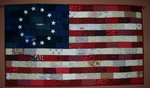
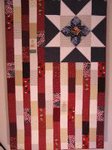
I read about this quilt by Cathy Ott in my local Sunday paper but it’s subscription only online and there was no photo with the article.  So I googled it and found this Journal Sentinel article which had a photo (the one below):   Military uniforms across decades go into gift of quilt
Zach Radtke didn't notice right away when a few of his Army uniform patches went missing.
The next time the Army Reservist saw them, they were on a beautiful quilt made by his girlfriend's mother. Five different Army uniforms spanning several decades make up the quilt.
When Cathy Ott came up with the idea for her military camouflage quilt she calls "The Boot," she didn't need to do much shopping for old military uniforms. She just opened her closet. ……

Tuesday, May 24, 2011

Shout Outs

Updated 3/2017-- photos and all links (except to my own posts) removed as many no longer active. 

Medgadget is the host for this week’s issue of Grand Rounds! You can read this week’s edition here.
Welcome to Grand Rounds, the weekly recap of the best in the medical blog universe! And welcome to Medgadget, where our team of researchers, doctors and engineers cover the world of medical devices and health-related technology news.
For Grand Rounds this week, we suggested bloggers send us technology-related material, and they rose to the challenge; we received some amazing links. Of course, there was great non-techie material too. It’s all below, loosely categorized, with photos and quotes lifted from posts of note.   …….
……………………………
Amazing story from BBC science reporter Neil Bowdler: Bionic hand for 'elective amputation' patient (photo credit)
An Austrian resident has voluntarily had his hand amputated so he can be fitted with a bionic limb.
The patient, called "Milo", aged 26, lost the use of his right hand in a motorcycle accident a decade ago.
….. what is called a "brachial plexus" injury to his right shoulder left his right arm paralysed. Nerve tissue transplanted from his leg by Professor Aszmann restored movement to his arm but not to his hand. ….
………………………………..
angienadia, MD, Primary Dx, has written a thoughtful post on resident work hours which can be read both on her blog or on KevinMD: New ACGME work hour regulations for interns: friend or foe?
…..Libby highlighted what was and is wrong with medicine today. Private physicians cannot and should not be allowed to manage patients who are sick enough to be admitted by phone – ………
The solution stares us in the eye – interns need a stricter cap on the number of patients they can admit or care for at one time. …... Sixteen-hour shift is not the answer – it only aggravates the actual source of the problem
……………………………….
Sandnsurf, LITFL, give praise to an inspiration patient: Nathan Charles
Patients are often a source of inspiration and hope.
One such stand out individual is Nathan Charles.
I first met Nathan in January of this year in my role as team doctor for the Emirates Western Force rugby union team. Nathan is a 21 year old elite athlete playing number 2 (hooker) for the Western Force. But what makes this achievement even more admirable is that he has cystic fibrosis. …………
…………………………………….
NPR’s Robert Krulwich writes about women in science: The Ghost Of Madame Curie Protests...
……….. I got to thinking about the not-so-subtle way women have been treated in science, even the most celebrated ones.
A few months back, I wrote a post about how the Nobel Committee (a committee of guys) in 1911 tried to get Madame Curie NOT to come and collect her second Nobel Prize. ……….
…………………………….
From @enochchoi via twitter:   my #TedXHayward talk on Disaster Medical Relief http://ow.ly/4ZTt2
Disaster Medical Relief on Prezi
…………………….
Fellow medical blogger @DrJohnM wrote about some things he observed on his recent trip to Germany:   A Kentucky Doc goes to Europe
……..For now, may I highlight a few of the more striking differences between Europe and the States, as noted by a Kentuckian on his first trip across the Atlantic?
(I realize that sophisticated well-traveled people already know this stuff, but I can’t help myself.)
First...The transportation system in Europe uses much smaller vehicles……….
Second…The bikes! I was stunned by the sheer numbers of smart-looking people pedaling around on the sidewalks and streets of Hamburg……….
On healthcare:
(A disclaimer: I am only making observations and asking questions; I am not suggesting we adopt the German healthcare system after a five-day visit.)
I quickly learned that all German citizens get free healthcare. But those who desire ‘more’ care can buy additional private coverage.  ……….
……………………………………………..
You can find some of my iPhone photos here. They are not nearly as good as the ones in this HuffPost Arts article from John Seed: The Art of iPhone Photography in Orange County (PHOTOS)
If Cartier-Bresson was still taking photos today, he would ditch his Leica and be taking photos with an iPhone. At least, that is the view of Knox Bronson, a curator, composer and iPhoneographer who has been gathering a stunning gallery of iPhone photos on his site: P1XELS the art of the iPhone.
Bronson, who is a purist, is only interested in collecting photos that have not in any way been manipulated outside of the phone by a computer:
This is one of mine (Instagram photo app with Inkwell filter of a pink rose in full bloom):

Wednesday, February 16, 2011

Photography in Medicine

Updated 3/2017-- all links removed as many are no longer active and it was easier than checking each one.

Fellow blogger Sterile Eye recently did a post on the historical use of mirrors in photos of wounded soldiers.  At the time I was reading an article in the journal Advances in Skin & Wound Care (full reference below) on wound photography.
Photography, not only in wound care, but in many areas of medicine/surgery (before and after photos, changes in hemangiomas, etc) is important.  As the article points out, if more than one person is to be responsible for taking these photos it is equally important that practice standards be implemented and adhered to.
The authors created a wound photography performance checklist to ensure consistency.   In addition to the patient’s name, wound evaluator’s name, and date, here are a few (not all) of the critical items on the checklist:
  • Confirm patient has written consent for wound photographs on approved hospital consent form.  [This could apply to any medical photograph and any location, ie office.]
  • Explain procedure to the patient and/or caregiver.
  • Place camera case on hard, clean surface, avoiding floor or patient care items.
  • Record patient information on customized photo label to include patient initials, medical record number, date, wound number, and location.  [Body part or hemangioma or nevus could substitute for wound.]
  • Place the patient in a comfortable position to expose the wound for picture.  [Use consistency of position as suggested in pdf from ASPRS for photography in plastic surgery.]
  • Apply customized photo label to the border of the wound for photograph.  [Could do this for nevi or skin lesion photos, but not for breast/abdomen photos.]
  • Wash hand and remove camera from carrying case while maintaining appropriate infection control practices.  Avoid using gloves when handling camera.
The American Society of Plastic and Reconstructive Surgeons (ASPRS), along with the Plastic Surgery Educational Foundation(PSEF) and Canfield Imaging Systems have put together a really nice brochure (pdf file) as a reference.  Once again, consistency is key to having photos that can be used to assess change from growth,  healing, or surgery, etc.
The brochure show standard position when taking photos of the face, the ear, the breasts, the abdomen, the hip/thigh, the leg/foot, the hand, the forearm, and the finger.
Consistency in key.  Changes can be more reliably measured when consistency in position, distance (camera to patient), lighting, makeup (same or none when photographing the face) is maintained.
The ASPRS brochure offers these additional tips which are nice.  Sometimes photos will be taken in different locations (an ER documenting the initial injury, the office for followup) so lighting and background may be different.  Optimally:
  • Use an appropriate backdrop.  Photograph patients against a solid-colored background. Light to medium blue is a good choice because it contrasts well with skin tones.  Medium gray
    may also work well.  Use a fabric drape or other non-reflective material.
  • Remove distractions.  Jewelry and clothing create an unnecessary distraction in patient photos.  They should be removed from the area of interest prior to photography.For
    body photos, it is advisable to use special modesty garments (available from medical supply dealers) instead of the patient’s underwear.
  • Use controlled lighting.  Patients should be photographed using a flash system or studio strobes (available room lighting is not appropriate).  Balanced cross-lighting (i.e., two strobes positioned symmetrically on either side of the camera) brings out surface texture without creating shadows that are overly harsh.
  • Reduce cast shadows.  The use of balanced lighting with diffusers can soften the shadows cast by the patient.To completely eliminate cast shadows, one or two additional lights may be aimed directly at the backdrop.
  • Record settings.  As much as possible, the same camera settings should be used for every patient. For settings that must be adjusted from patient to patient (such as exposure compensation), all values should be recorded, stored with the photos and referenced during post-op photography.
 
 
REFERENCES
Collaboration in Wound Photography Competency Development: A Unique Approach; Bradshaw, Leah Marie; Gergar, Margaret E.; Holko, Ginger A.; Advances in Skin & Wound Care. 24(2):85-92, February 2011; doi: 10.1097/01.ASW.0000393762.24398.e3
Photographic Standards in Plastic Surgery; ASPRS, PSEF, 2006 (pdf file)