Friday, May 13, 2011

AAQI Donation Quilt -- Let's Go

 Updated 3/2017--  all links (except to my own posts) removed as many no longer active.

Two years ago I made a quilt for the Alzheimer’s Art Quilt Initiative (AAQI).  This is my second quilt for them.
It is machine appliqued and quilted.  The center “heart” fabric is from a silk tie who’s theme was in the guise of “Where’s Waldo?” but involved Santa.  The confusion and fun inspired me to make this small quilt I call “Let’s Go.”  Let’s go on a trip and make some memories. 
I cut out the road signs and the red car from some Route 66 fabric had I used for a previous quilt.

Here is Santa in the middle of the zoo.
The quilt is 9 in X 11.5 in.  I used the fast triangles method for hanging.


I have registered and mailed the quilt.  It is not up for sale or auction on the site yet, but will be in the future as quilt #7034.  

Wednesday, May 11, 2011

More Organized Wisdom Un-Fair Play

Updated 3/2017-- photos and all links (except to my own posts) removed as many no longer active. 

You may recall that last year I wrote regarding the un-fair use of medical bloggers post and twitter feeds:
Fellow bloggers do you remember Wellsphere? Well, the latest “thief” of our information using our reputations and twitter feeds in a similar way is Organized Wisdom. Check out @laikas recent blog post on the topic: Expert Curators, WisdomCards & The True Wisdom of @organizedwisdom
Organized Wisdom (http://organizedwisdom.com and @organizedwisdom on Twitter) is a 3-4 year old company that uses a similar approach to filter useful health information out of the daily junk. ……
Part of the problem may be that Organized Wisdom doesn’t only share links from “Health Centers”, but also from Wellness Centers (Aging, Diet, Exercise & Fitness etc) and Living Centers (Beauty, Cooking, Environment). Apparently one card can have information for 2 or 3 centers (diabetes and multivitamins for example)
I feel used.
Organized Wisdom uses the credibility of me and other curators, including so-called “top expert curators” as Dr Pho (Kevin MD – blog), to cover up the incredibility of others, with the intention to lure users in. ……..
Just as with Wellsphere, I have asked Organized Wisdom to remove me from their expert curator list. I hope you will do the same.
……
Well it continues. A new acquaintance on twitter, @medmarketingcoe, has written an article: Unethical Health Information Content Farming by Organized Wisdom (OW) & how 5700 social media Curators participate in major ethical, legal, & moral violations without their knowledge
Laikas (@laikas) has written another post on the same topic: Health Experts & Pt Advocates Beware: 10 Reasons Why U Shouldn’t be Curator
……
What do you think of this screenshot from yesterday? Isn’t it misleading?  How does this help provide clear and accurate information for the general public?  You know the “I am a plastic surgeon in Little Rock, AR.  I may ‘suture for a living’, but I ‘live to sew’” is straight from my blogging profile, but it appears to be the statement being made about each of the doctors in the screenshot below.  This is a misrepresentation of each of those doctors.
Cynthia Bailey, MD blogs at Dr. Bailey's Skin Care Blog.  She is a dermatologist and does not live in Little Rock, AR.  Her own blog states she practices in California.
FaceLiftMD twitter profile states he is a “Board Certified Facial Plastic Surgeon specializing in Cosmetic Surgery of the nose, face, neck, eyelids, & eyebrow in DC, Maryland, and northern Virginia.”  Once again, he does not live in Little Rock, AR.
Vijay, Scanman, is a radiologist who lives and works in Salem, India.   He blogs at scanman's notes and posterous.
……
Once again, I encourage my fellow healthcare bloggers (doctors, nurses, patient advocates, etc) to remove yourself from any association with Organized Wisdom and other sites like them.

Update: Stem Cells and Fat Grafting

Updated 3/2017-- all links (except to my own posts) removed as many no longer active. 

Here are a few new items on stem cells and fat grafting I’ve come across recently. 
First are a couple of nice posts by fellow plastic surgeon/blogger Dr. Thomas Fiala, the Orlando plastic surgery blog who is attending The Aesthetic Meeting 2011 in Boston this week.
Live from Boston: Fat grafting controversies !!  (May 6, 2011)
……It's pretty clear that fat grafting works, and can be done safely. There seem to be two major methods that work……
One bit of consensus: if the breast was not pre-expanded, you can't expect to get more than 100 cc of fat to survive.
ASAPS 2011: Best of Hot Topics (May 9, 2011)
Here are my choices for the "Hot Topics" presented at the Boston ASAPS meeting:
1. "Stem Cell Facelift" - Dr. Peter Rubin reviewed the literature on the so-called Stem Cell facelift. It turns out that there really is no consistent technique for this method. Many advertised "stem cell facelifts" are simply regular facelifts with regular fat grafting and don't involve any extra stem-cell work at all. Furthermore, to date, there is NO DATA that this technique is superior to facelift with standard fat grafting. Summary: as of today, the stem cell facelift can either be considered unproven and under development, or if you are a little more cynical, it might just be "marketing hype".
The review by Rubin was highlighted in a press release:   ASAPS and ASPS Issue Joint Position Statement on Stem Cells and Fat Grafting on Monday, May 9, 2011.
….. Based on the current state of knowledge, the task force made the following recommendations to ASAPS/ASPS members and their patients:
  •     Terms such as "stem cell therapy" or “stem cell procedure” should be reserved to describe those treatments or techniques where the collection, concentration, manipulation, and therapeutic action of the stem cells is the primary goal, rather than a passive result, of the treatment. For example, standard fat grafting procedures that do transfer some stem cells naturally present within the tissue should be described as fat grafting procedures, not stem cell procedures.
  •     The marketing and promotion of stem cell procedures in aesthetic surgery is not adequately supported by clinical evidence at this time.
  •     While stem cell therapies have the potential to be beneficial for a variety of medical applications, a substantial body of clinical data to assess plastic surgery applications still needs to be collected. Until further evidence is available, stem cell therapies in aesthetic and reconstructive surgery should be conducted within clinical studies under Institutional Review Board approval, including compliance with all guidelines for human medical studies.  ………….
And the last item comes from the PRSonally Speaking Blog:  Articles of Interest Sneak Peak: Breast fat grafting with platelet-rich plasma: a comparative clinical study and current state of art.  It highlights the abstract of an article which will be published in the PRS journal in June 2011.
The role of Platelet-Rich Plasma (PRP) in enhancing fat grafts take is attracting the scientific community. However, there is a lack of clinical series on the matter.
The aim of this paper is to report Authors' experience in breast fat graft with and without PRP and to investigate the state-of-art on adipose tissue PRP enrichment……
Conclusion: In Authors' retrospective analysis no effect of PRP was seen in enhancing fat graft take when compared to Coleman fat graft. Further research and prospective clinical studies are strongly needed to understand the role of PRP, if any, in fat grafting.

Tuesday, May 10, 2011

Shout Outs

Updated 3/2017-- photos and all links (except to my own posts) removed as many no longer active. 

ePatient Dave is the host for this week’s “TEDx Maastricht” issue of Grand Rounds! You can read this week’s edition here.
Welcome to Grand Rounds for May 10, 2011!
I have a confession: I’m new at this. My initial exposure to Grand Rounds a while back gave me a warped view, and as I worked on this project, I was a little bit graceless. (Those of you who wrote to me about it know what I mean. I meant well…)
This week’s theme is the TEDx Maastricht conference that happened April 4. But first -
These news highlights were submitted:
  • Dr. Ed Pullen’s “Medical blog for the informed patient” is not thrilled about Vimovo, a new drug for osteoarthritis. Pullen believes in letting people know what’s going on behind the scenes. …
……………………………
Congratulations to fellow physician/blogger Dr. Chris Coppola (@chriscoppola) who shared this tweet recently:
Some exciting news! 'Coppla: A Pediatric Surgeon in Iraq' has won the 2011 Montaigne Medal, the Eric Hoffer award... http://fb.me/AE0vuaIA
Chris blogs at “Coppola: A Pediatric Surgeon in Iraq”
……………………………….
Shared on twitter by @EllenRichter “Wonderful way to end Nurses Week! What an honor! "First #Nurse Nominated as Army Surgeon General" http://goo.gl/IJq3A” (photo credit)
Maj. Gen. Patricia Horoho would become the first nurse and the first woman to serve as the Army Surgeon General if the Senate confirms her nomination and simultaneous promotion to lieutenant general, which were announced by Defense Secretary Robert Gates on Tuesday.
Horoho currently serves as Army deputy surgeon general and 23rd chief of the U.S. Army Nurse Corps. …
…………………………….
Did you every read “The House of God” by Samuel Shem, MD? Fellow blogger @inwhiteink shared a link on twitter to a wonderful essay by Shem: Fiction as Resistance (pdf)
I was a writer before I was a doctor. From an early age I was concerned with suffering and understanding, and I often turned to stories for solace. I loved stories long before I knew they were an essence of good doctoring—shared stories that bring solace, understanding, and healing to others. …... My early answers to the question, “What is healing?” came from these stories. I still have a piece of an envelope on which I copied part of a letter Chekhov wrote to an editor who had criticized his story “Ward Number Six”: “The best of writers are realistic and describe life as it is, but because each line is saturated with the consciousness of its goal, you feel life as it should be in addition to life as it is, and you are captivated by it” (1).
Life as it should be in addition to life as it is. Without
realizing it until many years later, this would become the motor of my writing. ……….
…………………….
This past Sunday I caught this interview by CBS Sunday Morning of Christy Turlington discussing her life and her new project “Every Mom Counts

Later the same morning, I saw this tweet from @DrJenGunter
RT “@CTurlington: Pls rd my @HuffingtonPost blog posting"Sacrifices of Motherhood" 4 #MothersDay huff.to/lVYMR4 @everymomcounts”
……………………………………………..
Ever wonder what type of tree you have encountered in the park or on a walk? Nick Genes, MD (@blogborygmi) tweeted about a new (free) iPhone app which identifies trees from photos of the leafs from on twitter: For The High-Tech Naturalist: LeafSnap Identifies Leaves Using Your iPhone’s Camera (photo credit)

I’d like an app like this for identify edible wild greens/foliage.
……………………………………..
Just How Dangerous Is Sitting All Day? [INFOGRAPHIC] (photo credit)  --  Remember to get up and move!

Monday, May 9, 2011

Tips on Dealing with Difficult Colleagues

Updated 3/2017-- all links (except to my own posts) removed as many no longer active. 

Recently I attended a CME course entitled “Dealing with Difficult Colleagues.”  It was part of my medical malpractice company’s risk management series to teach physicians/nurses how to lessen our risk of being sued. 
This lecture was given by Linda Worley, MD who is a psychiatry professor at UAMS.  She is a good speaker, easy to understand, engages the crowd, and knows her subject. 
My only complaint would be it focused only the “angry” or “frustrated” physicians who exhibit unprofessional behavior and did not include the ones whom you suspect might be difficult due to impairment (illness, drugs, alcohol). 
Difficult colleagues can impact a team (in office, OR, or hospital) by creating low morale, high staff turnover, inefficiency, decreased patient satisfaction, increased risk for poor patient outcomes, and increased risk of litigation.
Here are some of the A-B-C-D strategies given for handling “horizontal” hostility (or hostility handed from one person to another to the next in the team):

Acute Awareness
  • Recognize verbal and non-verbal behaviors
  • Do not ignore and let them grow
  • Remember, they are often driven by distress
Be a leader
  • Set a good example
  • Refuse to engage in negativity
Communicate assertively
  • Acknowledge conflict
  • Respect others’ views
  • Move to a private area
Dedicate yourself to making positive difference in the workplace
  • Don’t participate in gossip, infighting or backstabbing
  • Make daily deposits into the emotional bank accounts of others

When assertive communication is used in dealing with the difficult colleague both parties will feel they matter.  You should include “I” statements so the difficult colleague doesn’t feel attacked.  You should describe the situation/needs objectively.  It is always a good thing to give a genuine POSITIVE statement about the other person.  Confront your difficult colleague with honesty and compassion.
It is helpful for an office, clinic, or hospital to have a defined Code of Conduct as this sets up expectations and clearly defines appropriate behavior.  It also facilitates an objective discussion as it can be referred to as needed.


The following article was included in our information:
Our Fallen Peers: A Mandate for Change; Linda L. M. Worley, M.D.;  Acad Psychiatry 32:8-12, January-February 2008
doi: 10.1176/appi.ap.32.1.8

Friday, May 6, 2011

Prairie Queen Quilt

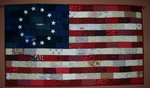
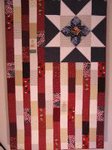
This is a quilt I made years ago (unsure as I failed to put a label on this one) using challenge fabric for a contest (didn’t finish in time).  I thought I recalled it being for a Hoffman challenge, but apparently not as the fabric doesn’t match any of the  fabric of past challenges.  So if anyone recognizes the fabric ….
I believe it was early 1990’s, around 1993.  I combined three blocks:  prairie queen, shoe fly, and flying geese.
The quilt is machine pieced and quilted.  It is 34 in square.  Here is a close up of the fabrics.
Here is the back which is made of the remaining gold fabrics.  Even though there is a sleeve on this for hanging, I use it to cover an old desk in my bedroom.

Thursday, May 5, 2011

Women Don’t Regret Prophylactic Mastectomy

Updated 3/2017--  all links (except to my own posts) removed as many no longer active. 

I was alerted to the presentation at the American Society of Breast Surgeons meeting (first reference below) by Judy Boughey, MD by @MedicalNews’ tweet:
ASBS: Prophylactic Mastectomy Good Even Years Later (CME/CE) http://bit.ly/kMCsdr
Boughey and colleagues note that previous researchers using cross-sectional surveys have found that the majority of women are satisfied with their decision to have contralateral prophylactic mastectomy (CPM) one to several years after the procedure.
Their study chose to look at the consistency of satisfaction and changes in adverse effects in the same women with longer term follow-up.
To do this, they surveyed a previously established cohort of women with unilateral breast cancer who had contralateral prophylactic mastectomy at the Mayo Clinic between 1960 to 1993. All of the women had a positive family history.  All were surveyed at two time points and the results compared.
The initial survey was done at a mean of 10.3 years after prophylactic mastectomy (second and third references below).  This survey involved 583 women.
Of the 583 women who responded to the initial survey, 523 were alive and resurveyed 10 years later. Data from both surveys are available for analysis on 269 women.
The researchers found the majority of women continued to be satisfied with their decision to have contralateral prophylactic mastectomy (86% initial survey; 90% follow-up survey, p=0.06).
Similar numbers to that of the initial survey reported neutral feelings or dissatisfaction with their CPM decision on follow-up survey (8% and 6%, respectively, initial survey; 4% and 6% follow-up survey).
There was no significant change in the proportion indicating they would choose CPM again, but as with satisfaction, the proportion was slightly higher on the follow-up survey (95% initial survey; 97% follow-up survey, p=0.27).
The most frequently cited adverse effects were similar at both time points and included body appearance (29% vs 31%, initial vs follow-up survey, p=0.61), sense of femininity (21% vs 24%, p=0.25) and sexual relationships (24% vs 23%, p=0.68).
From the MedPage News article:  "This information is useful in the education of patients and physicians," said Boughey. "Patients should consider their choice carefully and be made aware of adverse events. However, those that decide for contralateral prophylactic mastectomy are likely to remain satisfied with the decision in the long term."


A related post of interest is one from Dr. Dialogue:  Is Watchful Waiting too Difficult? (originally posted there on March  13, 2010 and on Better Health on May 1st, 2011:  Why Double Mastectomies Are Popular: Watchful Waiting Is Too Difficult?)


REFERENCE
1.  Contralateral prophylactic mastectomy: Consistency of satisfaction and psychosocial consequences over time;  Boughey JC, et al; ASBS 2011; Abstract 1693 (pdf file)
2.  Satisfaction After Contralateral Prophylactic Mastectomy: The Significance of Mastectomy Type, Reconstructive Complications, and Body Appearance; Frost MH, Slezak JM, Tran NV, Williams CI, Johnson JL, Woods JE, Petty PM, Donohue JH, Grant CS, Sloan JA, Sellers TA, Hartmann LC;  JCO Nov 1, 2005:7849-7856; DOI 10.1200/JCO.2005.09.233.
3.  Contralateral Prophylactic Mastectomy: Efficacy, Satisfaction, and Regret (Editorial); Marc D. Schwartz; J Clin Oncol 2005, 23: 7777-7779; DOI: 10.1200/JCO.2005.08.903

Wednesday, May 4, 2011

Liposuction and Redistribution of Fat

Updated 3/2017-- photos and all links (except to my own posts) removed as many no longer active. 

Here’s the tweet I posted Sunday evening:
I've told pts this for years now>>> Liposuction Study Finds That Lost Fat Returns - http://nyti.ms/kheltN
The New York Times article reports on a liposuction study published in the April issue of the journal Obesity (full reference below).   The NY Times article uses this photo as graphic illustration
and a quote from a plastic surgeon who says he is surprised.
Dr. Felmont Eaves III, a plastic surgeon in Charlotte, N.C., and president of the American Society for Aesthetic Plastic Surgery, said the study was “very well done,” and the results were surprising. He said he would mention it to his patients in the context of other information on liposuction.
I have told my patients for years to consider the fat cells in their body as drawers or storage bins.  If I take away some of the drawers and they continue to take in “fat” that needs to be stored, the body will put it somewhere.  If there are now fewer drawer options in the saddlebag or abdominal region, then where will it go?  Most likely the upper body, etc.
This article does more definitively define the answer to where it will be placed.
The study enrolled 32 healthy women (mean age 36) with disproportionate fat depots (lower abdomen, hips, or thighs) were enrolled and then randomly placed into either a small-volume liposuction group (n = 14, mean BMI: 24 ± 2 kg/m2) or control (n=18, mean BMI: 25 ± 2).  Participants agreed not to make lifestyle changes while enrolled.
Baseline body composition measurements included dual-energy X-ray absorptiometry (DXA) (a priori primary outcome), abdominal/limb circumferences, subcutaneous skinfold thickness, and magnetic resonance imaging (MRI) (torso/thighs).
The surgery group had their liposuction within 2-4 weeks of the baseline measurement.  Identical measurements were repeated at 6 weeks, 6 months, and 1 year later.
After 6 weeks, percent body fat (%BF) by DXA was decreased by 2.1% in the lipectomy group and by 0.28% in the control group (adjusted difference (AD): −1.82%; 95% confidence interval (CI): −2.79% to −0.85%; P = 0.0002).
This difference was smaller at 6 months, and by 1 year was no longer significant (0.59% (control) vs. −0.41% (lipectomy); AD: −1.00%; CI: −2.65 to 0.64; P = 0.23).
The fat (adipose tissue) reaccumulated differently across various sites. 
After 1 year the thigh region remained reduced, but fat (adipose tissue) reaccumulated in the abdominal region.   Following suction lipectomy, BF was restored and redistributed from the thigh to the abdomen.
…..
I do not find this surprising.  Once the drawer is removed, it can not store items any longer.
If you only liposuction the lower abdomen (area below the umbilicus), those patients are likely to return with increased fat in the upper abdomen.  It needs to be keep in proportion.


REFERENCE
Fat Redistribution Following Suction Lipectomy: Defense of Body Fat and Patterns of Restoration; Hernandez TL, Kittelson JM, Law CK, Ketch LL, Stob NR, Lindstrom RC, Scherzinger A, Stamm ER,  Eckel RH; Obesity, (7 April 2011); doi:10.1038/oby.2011.64

Tuesday, May 3, 2011

2011 Asklepion and Shuffield Award Winners

Updated 3/2017-- photos and all links (except to my own posts) removed as many no longer active. 

The 2011 Arkansas Medical Society Annual Meeting was this past weekend.  Each year two awards are given:  the Asklepion Award and the Shuffield Award.
The Asklepion Award is presented to an AMS member physician who promotes the art and science of medicine and the betterment of public health; embodies the values of the medical profession through leadership, service, excellence, integrity and ethical behavior; and enriches patients, colleagues and the community through dedicated medical practice.
This year’s recipient of the Asklepion Award is Morriss M. Henry, MD.  He is a retired ophthalmologist in Fayetteville who has been active in both medicine and in our state government since he began his practice in 1961.  He served as president of the AMS in 1982 and has served on multiple boards.  Dr. Henry served in the Arkansas legislature as State Representative (1967-1971) and State Senator (1971-1984).  He has been involved in many community endeavors, including the development of the Jones Eye Institute at UAMS and Hobbs State Park. 
The Shuffield Award is the highest honor in the medical community for a non-physician.  It recognizes an Arkansas who has done outstanding community work in the health care field.  The Shuffield Award is named in memory of Doctors Joe and Elvin Shuffield, a father and son physician team from Little Rock, who devoted their lives to improving the quality of health care in this state.
This year’s recipient of the Shuffield Award is Charles ‘Ship’ Mooney, Jr.  He has practiced law in Jonesboro, Arkansas for the past 28 years.  The award was given to him for the work he has done as the founder of “The Out of the Dark Movement” which he started in the fall of 2008.   He was spurred into action after reading in his local paper the report of 5 heroin overdoses in community youths.  His first action was to write a letter to the editor which was published.  This resulted in a public meeting regarding the issue at which 250 people showed up.  One hundred of them signed up to help try to solve local issues caused by chemical addiction in their community.  They now have more than a thousand volunteers.  (photo credit)

Shout Outs

Dr. Romanzi's Urogynics Blog is the host for this week’s “International Health” issue of Grand Rounds! You can read this week’s edition here.

Welcome to Grand Rounds May 3, 2011, the official blog of Better Health: smart health commentary.

This week’s medical blog sampler brings you fresh perspectives on

INTERNATIONAL HEALTH

. ………..

……………………………

Dr. Wes has been doing a great job of investigative reporting on the issue of  the use of RFID tags at meetings:

What They Know (April 6, 2011)

ACC Explains the Use of RFID Tags on Attendee's Name Badges (April 20, 2011)

The Implications of Physician Tag and Release (April 24, 2011) – read the comments on this one, including the AMA’s

ACC Responds (Again) to Why They Track Their Membership (April 29, 2011)

……………………………….

Shared on twitter by @docgurley -- “Here's an article every American should read: An outsider's view of our journalists' coverage of healthcare reform: http://ow.ly/4I0bQ”

As a Brit looking back on the AHCJ conference which ended just a week ago, I have to say that the overwhelming impression I took away was that Americans appear to love their health insurance companies more than almost anything else, and that US health journalists appear to be less critical and analytical in approaching health reform and health policy than when they report on new drugs and treatments. …….

…………………………….

Another link shared on twitter.  This one via @Berci to an article on gene expression:  The royal wedding and outbreeding 

In the wake of the post from earlier this week on the inbreeding within the House of Windsor (and current lack thereof), Luke Jostins, a subject of the British monarch, has a nice informative post up, Inbreeding, Genetic Disease and the Royal Wedding. This tidbit is of particular interest:

In fact, eleventh cousins is a pretty low degree of relatedness, by the standard of these things. A study of inbreeding in European populations found that couples from the UK are, on average, as genetically related as 6th cousins (the study looked at inbreeding in Scots, and in children of one Orkadian and one non-Orkadian. No English people, but I would be very suprised if we differed significantly). 6th cousins share about 0.006% of their DNA, and thus have about a 0.06% chance of developing a genetic disease via a common ancestor. …..

…………………….

Did you read the post on KevinMD by Chris Rangel, MD: “Why some EMR programmers think physicians are stupid”?  The first paragraph:

Every major industry is now computerized with one glaring exception; health care delivery. Thirty years after Steve Jobs began selling personal computers out of his garage, far less than 50% of physician practices and hospitals have converted to any form of electronic medical record.

I read the article, but kept coming back to this one paragraph.  Do you know of any other industry who is not allowed to raise their fees to pay for the implementation of adding this new technology to the business?  I can’t think of any.   Cost is one of the big barriers here. 

……………………………………………..

The winner of the Alliance for American Quilts 2011 contest has been announced.  To see the full winners list  go here (photo credit)

And the Grand Prize winner is...Jamie Fingal of Orange, California! Jamie's quilt, "Soul Sisters," a tribute to her friendship with fellow quiltmaker Leslie Tucker Jenison…..Congratulations to everyone who made a quilt. Paducah audiences love your quilts!

Mine does not even compare.  Great work Jamie!

Monday, May 2, 2011

FDA Update: Restylane

Updated 3/2017-- all links (except to my own posts) removed as many no longer active. 

The FDA General and Plastic Surgery Devices Panel of the Medical Devices Advisory Committee met on April 27, 2011 to review the request for expanding the use of Restylane for augmentation of the lips.  The panel voted 6 to 0 (1 abstaining) that Restylane for lip augmentation is generally safe and effective for this purpose and that the benefits outweigh the risks.
The FDA still has to make a final decision on Restylane injectable gel for lip augmentation, but the agency usually follows the advice of its advisory panels, which consist of outside experts.
Restylane was approved by the FDA in 2003. It is a non-animal stabilized hyaluronic acid gel. Restylane is free from animal proteins. This limits any risk of animal-based disease transmissions or development of allergic reactions to animal proteins. Allergy pretesting is not necessary.
Perlane is a more robust form of Restylane intended for use in the deep dermis and at the dermal-fat junction. Restylane is indicated for the correction of moderate to severe facial wrinkles and folds.
The most commonly observed side effects are temporary redness and swelling at the injection site, which typically resolve in less than seven days. Both are made by Medicis.  Both are available with lidocaine (Restylane-L, Perlane-L).  Patients should be limited to 6.0 mL per treatment.
According to Medicis, Restylane is the most-studied aesthetic dermal filler in the world, and has been used in over 10 million treatments worldwide.

From Medscape news article:
During the public comment portion of the meeting, Gloria Duda, MD, board-certified plastic surgeon from McLean, Virginia, who was representing the American Society for Aesthetic Plastic Surgery, noted that Restylane is commonly used off-label to augment and contour the lips, and she encouraged the panel to support its use for this indication.
Lip augmentation is a "very frequently" requested procedure, Dr. Duda said, and, in her experience, the results are "immediate and reproducible and the risks with hyaluronic acid are minimal."
"I perform over 120 lip augmentations per year with no complications and 95% retention with return visits at 8 to 12 months for repeat procedures," Dr. Duda said.
General and Plastic Surgery Devices Panel of the Medical Devices Advisory Committee. Meeting held April 27, 2011, in Gaithersburg, Maryland.


Related posts:
Dermal Fillers (August 30, 2007)
Lip Augmentation (January 25, 2008)
Guest Post by Dr Val--Lip Plumping With Restylane: What Your Doctor Might Not Tell You (September 25, 2008)
Injectables Roundup (November 11, 2010)


REFERENCES
Medicis Press Release, April 27, 2011
FDA:
Restylane™ Injectable Gel  (approval date December 2003)
April 27, 2011: General and Plastic Surgery Devices Panel of the Medical Devices Advisory Committee Meeting Announcement
2011 Meeting Materials of the General and Plastic Surgery Advisory Panel (April 27, 2011)

Sunday, May 1, 2011

Beautiful

Updated 3/2017-- video and all links (except to my own posts) removed as many no longer active. 

American Idol covered Carol King's songs this past week. Haley Reinhart did “Beautiful.”  The words are a reminder of a simple way to be beautiful.
You've got to get up every morning with a smile on your face
And show the world all the love in your heart
Then people gonna treat you better
You're gonna find, yes, you will
That you're beautiful as you feel …..
Carol King puts it much more beautifully than the essay by Robert Tornambe, M.D.: What Makes a Person Ugly?
Here is Carol King singing “Beautiful” live. Enjoy