Thursday, July 2, 2009

Fireworks Safety

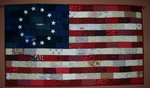
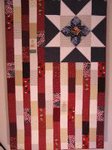
Time for a reminder of safe firework use.  I hope you will all have a safe and happy July 4th.  Be safe and stay out of the ER. 
Please use the following tips:
  • Never allow children to play with or ignite fireworks.
  • Read and follow all warnings and instructions.
  • Fireworks should be unpacked from any paper packing out-of-doors and away from any open flames.
  • Be sure other people are out-of-range before lighting fireworks. Small children should be kept a safe distance from the fireworks; older children that use fireworks need to be carefully supervised.
  • Do not smoke when handling any type of "live" firecracker, rocket, or aerial display.
  • Keep all fireworks away from any flammable liquids, dry grassy areas, or open bonfires.
  • Keep a bucket of water or working garden hose nearby in case of a malfunction or fire.
  • Take note of any sudden wind change that could cause sparks or debris to fall on a car, house, or person.
  • Never attempt to pick up and relight a "fizzled" firework device that has failed to light or "go off"
  • Do not use any aluminum or metal soda/beer can or glass bottle to stage or hold fireworks before lighting.
  • Do not use any tightly closed container for these lighted devices to add to the exploding effect or to increase noise.
  • Never attempt to make your own exploding device from raw gunpowder or similar flammable substance. The results are too unpredictable.
  • Never use mail-order fireworks kits. These do-it-yourself kits are simply unsafe.


Wednesday, July 1, 2009

Infections After Face Lifts

Updated 3/2017-- all links (except to my own posts) removed as many no longer active. and it was easier than checking each one. 

When you read articles at sites like MedScape or MedPage Today, you are often referred to other articles of interest.  That’s how I came across this one on the MedPage Today site.   I went there to read the one on “Sinus Infections Cause Toxic Shock Syndrome in Children”.  Both are interesting articles, but I want to discuss the article referenced below that was discussed on MedPage Today.
The topic is postoperative infections in face lift surgery.  The stated objective of the article:
To determine the incidence of methicillin-resistant Staphylococcus aureus (MRSA)-positive surgical site infections after face-lift surgery and to discuss the screening, prevention, and treatment of such infections.
MRSA infections are never a good thing, but as a postoperative face lift infection – really not a good thing.
The article mentions having done a literature review and finding only one published article (second reference below) on the incidence of postoperative surgical site infections (SSIs) after rhytidectomy.  It was a retrospective study performed more than 10 years ago on 6166 consecutive face-lifts.   In that study only 11 infections requiring hospitalization were found (0.18%) and none of the cultures were positive for MRSA.  
This current article is also a retrospective study.   Charts of 780 patients from January 2001 to January 2007 were reviewed.  These patients all had a deep-plane rhytidectomy.  Some had other procedures such as blepharoplasty, browpexy, rhinoplasty, autologous fat transfer, laser resurfacing, and chemical peel. All were done as outpatients.
The article highlights the techniques used for infection prevention:
The morning of surgery, all patients showered and washed their hair with chlorhexidine solution.
After the induction of anesthesia and before incision, the patients' faces were scrubbed with chlorhexidine and povidone-iodine.  Attention was placed along the areas of the face-lift incision, including the hair-bearing scalp 5 cm posterior to the hairline.
Sterile towels were then secured around the patient's head to sterilely secure the surgical site.
Before incision, 1 g of intravenous cefazolin sodium (Ancef) was administered (clindamycin if the patient was allergic to penicillin).
After surgery, all patients were given a 7-day prescription for oral cefadroxil (Duricef).
The patients were then seen on postoperative days 1, 5, 8 (suture removal), 21, and 40. During each visit, they were examined for any signs of infection, such as erythema and fluid collection.

There were 4 patients (out of 780) who developed postoperative wound infections with cultures that were positive for MRSA.  Another patient developed a wound infection that yielded anaerobic skin flora.  This gave an overall infection rate was 0.6%.   As noted in the article 80% (4/5) of the infections were MRSA related.
The article highlights each of the five patients with individual case reviews.  I want to highlight the outcomes in terms of scarring.  With the exception of the first case, there is really not enough follow up on the scar evaluation.
Case 1:  “Six months after surgery, the scarring was barely perceptible.”
Case 2:  “Four weeks after surgery, the patient had healed completely. She had no scarring, and the area of the incision that was opened had healed well.”
Case 3:  “and the patient healed uneventfully over the next 7 days.”
Case 4:   “The patient healed rapidly, and she had no evidence of infection or scarring after 7 days of treatment.”
Case 5 (non-MRSA):   “She improved rapidly and healed well”

The article makes some nice points for setting up screening protocols.  For the facelift patients, perhaps preoperative cultures of the nose and throat.
Those cases with MRSA colonization and no clinical infection were treated with mupirocin (Bactroban) nasal ointment 3 times daily and 2% triclosan (Aquasept) washes twice daily for 5 days.
Povidone-iodine (Betadine) mouthwash was also used 2 to 3 times daily as gargle for 5 days. Chlorhexidine mouthwash was used in patients with a contraindication to iodine.
The article does a very nice job of point out the importance of postoperative surveillance, aggressive early treatment (incision and drainage, culture, antibiotics).
Once MRSA infection is diagnosed after a face-lift, aggressive treatment is advised to prevent rapid progression of the infection. Prompt initiation of appropriate antibiotic therapy, along with incision and drainage, is essential. The cosmetic nature of rhytidectomy may make facial plastic surgeons hesitant to open wounds that have an infected collection. However, openly draining wounds that have collected MRSA-positive material is prudent.
…….
The facial plastic surgeon must be quick to culture any suspicious fluid or discharge. The result of the sensitivity and resistance profile from these cultures will be the ultimate guide for the antibiotic regimen. Prompt culture cannot be stressed enough. The infection can spread rapidly along the surgical dissection site and become extensive in a very brief time frame. …….


REFERENCES
"Methicillin-resistant staphylococcus aureus-positive surgical site infections in face-lift surgery" Arch Facial Plast Surg 2008; 10: 116 – 123; Zoumalan RA, Rosenberg DB
Infections requiring hospital readmission following face lift surgery: incidence, treatment, and sequelae;  Plast Reconstr Surg. 1994;93(3):533-536; LeRoy JL Jr, Rees TD, Nolan WB III.

Tuesday, June 30, 2009

Shout Outs

Updated 3/2017-- photos and all links (except to my own posts) removed as many no longer active. and it was easier than checking each one. 

Dr Edwin Leap is this week's host of Grand Rounds. You can read it here. Great edition!
Today is June 30, 2009. Which means, if I’m correct, that tomorrow is July 1st. And July 1st is the day that, all across the country, recent medical school graduates begin residencies in their assorted specialties. An amazing time, indeed! I remember it well. Standing around in a suit, listening to lectures, trying to figure out who was really smart and who was more like me. None of us knowing, by a long-shot, what we were embarking upon.
The latest edition of Change of Shift (Vol 3, No 26) is hosted by ReHabRN! You can find the schedule and the COS archives at Emergiblog.
Welcome to the June 25, 2009 edition of Change of Shift. Many thanks to Kim at emergiblog for allowing me to host this edition.
'Tis the holiday season, so I thought I'd go for a holiday theme for this edition. So since I'm thinking holiday more in the sense of how our British friends and other folks around the world view holidays as Americans view vacation. Ah, relaxing and not being at work tops the list for me.
Dr Gwenn O’Keeffe, Pediatrics Now, has authored the American Academy of Pediatrics’ expert-driven "social media and sexting tips" for parents: Talking to Kids and Teens about Social Media and Sexting. The “tip sheet” is full of good information and advice. Here’s a small example:
“Sexting” refers to sending a text message with pictures of children or teens that are inappropriate, naked or engaged in sex acts. According to a recent survey, about 20 percent of teen boys and girls have sent such messages. The emotional pain it causes can be enormous for the child in the picture as well as the sender and receiver--often with legal implications. Parents must begin the difficult conversation about sexting before there is a problem and introduce the issue as soon as a child is old enough to have a cell phone. Here are some tips for how to begin these conversations with your children:
H/T to Lakshmi for this tweet which links to a wonder article:
RT @TheCuriousMind: Habitat: 15 Year Old Invents Algae-Powered Energy System http://tinyurl.com/lmsqlg; My hero
Nice story by NPR on the stigma nonsmokers with lung cancer experience.
Smoking is such a well-known cause of lung cancer that many don't realize thousands who never smoked get the diagnosis. The great majority are women. Recent research shows it's really a different disease than smoking-related lung cancer. But those with the diagnosis say they suffer the same stigma.


This week Dr Anonymous will be taking July off.

Monday, June 29, 2009

Breast Implants and Lymphoma Risk

Updated 3/2017-- all links (except to my own posts) removed as many no longer active. and it was easier than checking each one.

Yes, I’m behind in my journal reading. This article was published in the March issue of the Plastic and Reconstructive Surgery Journal. The article is the summary of a literature review using PubMed to review the evidence from all epidemiologic cohort studies of cancer incidence among women with cosmetic breast implants that include results on the incidence of non-Hodgkin's lymphoma, with specific attention to lymphomas arising in the breast.
The review was prompted by the article from The Netherlands (second reference below) which suggested an association of breast implants with anaplastic large T-cell lymphoma.
Primary breast lymphoma is a rare malignancy. Most of them are of B-cell origin. It is important for anecdotal reports not to alarm providers or patients. This review article found only five long-term cohort studies which had evaluated the incidence of non-Hodgkin's lymphoma following cosmetic breast augmentation surgery.
The authors looked at each study and came to the following conclusion:
The association between cosmetic silicone breast implants and non-Hodgkin's lymphoma has been examined in a number of long-term cohort and surveillance studies, based on large numbers of women with virtually complete follow-up substantially longer than the 17-year study period presented in the Dutch case-control study.
In the only cancer incidence study to include women followed for at least 25 years after implantation, including 3336 women followed for 15 years or more and 827 followed for at least 25 years, no significant excess of non-Hodgkin's lymphoma was observed overall and not one primary lymphoma of the breast was observed.
Moreover, the largest study to date, with cancer surveillance up to 24 years, actually reported a reduced incidence of total non-Hodgkin's lymphoma among almost 25,000 Canadian women with cosmetic breast implants.
Based on the epidemiologic studies published to date, there is no evidence of an excess of non-Hodgkin's lymphoma incidence overall among women with cosmetic silicone-filled breast implants.
REFERENCES
Breast Implants and Lymphoma Risk: A Review of the Epidemiologic Evidence through 2008; Plastic & Reconstructive Surgery. 123(3):790-793, March 2009; Lipworth, Loren Sc.D.; Tarone, Robert E. Ph.D.; McLaughlin, Joseph K. Ph.D. (subscription required)
Anaplastic large-cell lymphoma in women with breast implants; JAMA. 2008;300:2030-2035; De Jong D, Vasmel WLE, de Boer JP, et al. (subscription required)

Sunday, June 28, 2009

SurgeXperiences 226 is Up!

Updated 3/2017-- all links (except to my own posts) removed as many no longer active. and it was easier than checking each one. 

The 50th edition of SurgeXperiences is hosted by Vijay,  Scan Man’s Notes.  You can read this edition here.
Welcome to the latest edition of SurgeXperiences, the fortnightly carnival of blog posts related to surgery.
This happens to be the 50th edition. Ironically the number 50 has acquired an altogether unwelcome significance this week due to the unfortunate and untimely death of Michael Jackson aged 50. Mr. Jackson may very well be the King of Pop to fans and music lovers, but to most of us in healthcare he is probably better known as the worst example of celebrity plastic surgery on demand or as a prominent plastic surgeon describes him, the most famous “nasal cripple.”

The host of the next edition (227), July 12th, will                   . The deadline for submissions is midnight on Friday, July 10th. Be sure to submit your post via this form.
SurgeXperiences is a blog carnival about surgical blogs. It is open to all (surgeon, nurse, anesthesia, patient, etc) who have a surgical blog or article to submit.
Here is the catalog of past SurgeXperiences editions for your reading pleasure. If you wish to host a future edition, please contact Jeffrey who runs the show here.

Friday, June 26, 2009

Interlaced Ribbon Quilt

I made this quilt for a lawyer friend who helped my husband several years ago.  He and his wife use it as a wall hanging rather than a bed quilt.  It is 88.5 in X 99 in.  Recently he went to visit them and I asked him to get some photos of it for me.
The quilt is machine pieced by me, but I paid Peggy Ries (Peg’s Quality Quilting, Epworth, Iowa) to do the machine quilting for me.  She does excellent work.
Because of the size, my husband wasn’t able to get a true full view photo of the quilt.
Here is a detail photo that shows some of the fabrics.
Here is another detail photo that shows some of the fabrics.

Thursday, June 25, 2009

How Poland’s Syndrome Was Named

 Updated 3/2017-- photos and all links (except to my own posts) removed as many no longer active. and it was easier than checking each one.

Poland's syndrome is a congenital disorder. The classic ipsilateral features of Poland syndrome include the following: absence of sternal head of the pectoralis major, hypoplasia and/or aplasia of breast or nipple, deficiency of subcutaneous fat and axillary hair, abnormalities of rib cage, and upper extremity anomalies. These upper extremity anomalies include short upper arm, forearm, or fingers (brachysymphalangism). (photo credit)
Additional features of Poland syndrome include the following: hypoplasia or aplasia of serratus, external oblique, pectoralis minor, latissimus dorsi, infraspinatus, and supraspinatus muscles; total absence of anterolateral ribs and herniation of lung; and symphalangism with syndactyly and hypoplasia or aplasia of the middle phalanges. (photo credit)
The name of this condition pays homage to Dr. Alfred Poland of Guy's Hospital, who in 1841 described a case of these two deformities during the autopsy of a 27-year-old convict, but as this article points out he wasn’t the first to recognize the syndrome.
If you enjoy medical history, then you will enjoy this article. It explores the historical literature to reveal the progression of knowledge about this syndrome. Here is a quick summary of different investigators who contributed to the understanding of Poland's syndrome. The article goes into more detail of each.
1826 Lallemand is first to describe the absence of the pectoralis.
1835 Bell is the first to record the absence of the pectoralis
1839 Forlep is first to describe the paired absence of the pectoralis and ipsilateral syndactyly
1841 Poland is the second to describe the paired absence of the pectoralis and ipsilateral syndactyly
1895 Thomson is the first to document an understanding that the deformities accompanied one another
1900 Furst is the first to propose that the anomalies constituted a syndrome
1902 Bing is the first to present a case series of patients with the syndrome
1940 Brown and McDowell are the first to document a thorough review of the syndrome
1962 Clarkson is the first to propose the name “Poland’s Syndactyly” for the syndrome
As the authors conclude:
Honoring physicians for notable achievements in the form of eponyms can be viewed as a harmless way to bring a little bit of warmth to an otherwise cold world of facts. The least we can do, though, is to recognize the contributions of those who endeavored to shape our current understanding of disease.
Perhaps if history took another course, Poland's syndrome would instead be called Frolep's syndrome or Furst's syndrome. Or perhaps it might simply have been called pectoral-aplasia-dysdactylia syndrome
REFERENCES
Poland's Syndrome: Current Thoughts in the Setting of a Controversy; Plastic & Reconstructive Surgery. 123(3):949-953, March 2009; Ram, Ashwin N. B.S.; Chung, Kevin C. M.D., M.S. (subscription required)

Wednesday, June 24, 2009

Healthcare Discussion

Updated 3/2017-- photos and all links (except to my own posts) removed as many no longer active. and it was easier than checking each one. 

I was in the “audience” of the phone conference today organized by Dr. Bob Goldberg, President, Center for Medicine in the Public Interest Advance (CMPIA).  In addition to him, Dr. Val Jones (Founder and CEO Better Health Network) and Dr Gary Puckrein (President, National Minority Quality Forum) were on the panel of speakers.  The focus was to be on the risks of government-run healthcare.
It seemed to me that many good points were made, but the main one was that the focus of the healthcare discussion needs to be refocused on the patient and the care given rather than simply on the high cost of care/insurance and any cost savings to be gained short-term.  As Dr Wes pointed out in his recent post (The $400 Billion Dollar Question), patients aren’t at the “table” of many of the discussions of healthcare reform that are taking place.
Should America understand precisely what is being cut when we see $400 billion suddenly disappear from the health care reform budget?
I would argue we must know.
After all, it's we the patients who are not at the policy table, and you can bet that it's the patients who will ultimately be paying the tab, be it directly through health care premiums, or indirectly by taxation or deficit spending.

There were two links given by the CMPIA as sources for factual information on the healthcare discussion: publicplanfacts.org and biggovhealth.org.
I went to both, but in an effort to keep this post at a reasonable length will highlight only a few from the first link.  First this one --
  • Public plan proponents are advocating a $1.25 per hour per employee tax to pay for the public plan. The Commonwealth Fund, “The Path to a High Performance U.S. Health System”, p. 29, February 2009.
I won’t comment on that one, but will this next one:
  • Under the public plan, doctors and hospitals would see their reimbursements for providing medical care cut by as much as 30%. The Commonwealth Fund , “The Path to a High Performance U.S. Health System”, p.33, February 2009.
This decrease in reimbursement troubles me as I have watched the struggles many hospitals have experienced over the past several years with the current reimbursements.  I think this trend will only get worse.  Check out Barbara Duck’s series at Medical Quack on desperate hospitals.  Here’s an excerpt from the May 24, 2009 post:
In Chicago, Illinois
The Loyola University Health System in west suburban Maywood on Tuesday said it will eliminate more than 440 jobs, or about 8 percent of its workforce, amid the recession and an economic downturn causing an influx of patients who cannot pay their bills.
The cost of patients who cannot pay has increased 73 percent, to $31.3 million from $18.1 million, from a year earlier for the nine months ended March 31.
"We have been hit by a number of things," Dr. Paul Whelton, chief executive of Loyola University Health System, said in an interview. "We are having more trouble with charity care, and the money we are getting [from patients] is more slow to come in. But we have a mission to provide care in our communities and we are going to stick to it."

In all this talk on healthcare reform, it seems to me and others at the phone conference that the quality of patient care rather than simply cost containment needs to be put back at the front of the discussion.   Healthcare should provide care without being hampered by more and more rules and regulations in an effort to contain costs.  We don’t need more rules like the Medicare’s 75% rule.
Saving money by providing an inferior “product” isn’t what any of us want.  Is it?

Surgical Glove Perforation and the Risk of Surgical Site Infection – article review

 Updated 3/2017-- all links (except to my own posts) removed as many no longer active. and it was easier than checking each one.

H/T to ACP Internist for bringing this article to my attention (see full reference below).
It's best not to get holes in one's surgical gloves in the middle of a procedure, as this leads to a higher risk of infection for the patient, the Archives of Surgery reports in a study about the effect of ripped gloves. …… Which is, perhaps, why the surgeons put on the gloves in the first place?
For me, I found nothing new in this article.  Yes, surgeons wear gloves to both protect the patient and him/herself.  Gloves are part of the universal precautions. 
It is well known that the risk of getting a hole in one’s glove increases with the length of the surgery (especially when over 2 hours) or when dealing with spiked bone fragments.  The authors of the article felt they had a new angle --
The frequency of glove perforation during surgery has been studied extensively and found to range from 8% to 50%.  The impact of glove perforation on the risk of surgical site infection (SSI), however, is unknown. The present study was conducted to test the hypothesis that clinically visible surgical glove perforation is associated with an increased SSI risk.

I think most surgeons change their gloves if the hole is visible.   It is intuitive that the patients who are not on antimicrobial prophylaxis would be at the greatest risk of surgical site infection when a defective glove is involved.  This holds true with the authors’ findings: 
In the presence of surgical antimicrobial prophylaxis, the rate of SSI (6.9% vs 4.3%) was higher in procedures involving perforated gloves compared with procedures with maintained intraoperative asepsis.  After adjusting for 6 confounders in multivariate logistic regression analysis, however, the odds of contracting SSI in the event of glove puncture were not significantly higher when compared with procedures with intact gloves.
In the absence of surgical antimicrobial prophylaxis, glove leakage was associated with an SSI rate of 12.7%, as opposed to 2.9% when asepsis was not breached.  This difference proved to be statistically significant.

Double gloving may decrease the risk of transfer of germs (either direction:  patient to surgeon or surgeon to patient), but it is not always the answer.  I have tried all the combinations:  both gloves the same size, the outer one a smaller size, the outer one a larger size.  In all cases, my hands go numb.  Numb hands is not a good thing in a surgeon.
Routine changing of one’s gloves might capture some of the “un-caught” glove perforations and therefore decrease the risk of SSI in patients.  The authors even suggest doing so every two hours.  It would be interesting to figure up the costs of all the glove changes compared to the SSI costs.  Would it be cost effective?
The use of surgical microbial prophylaxis for all cases is still controversial.  The risk of SSI with clean surgical procedures is considered too low to be worth the risk of “side effects” from the antibiotics or the possibility of contributing to “super bugs.”  As pointed out in the article, indications for prophylactic antimicrobials approved by the CDC are clean operations involving prosthetic material and any operation in which a potential SSI would pose catastrophic risk (ie all cardiac operations, most neurosurgical and major vascular operations, and some operations on the breast).


REFERENCE
Surgical Glove Perforation and the Risk of Surgical Site Infection; Arch Surg. 2009;144(6):553-558; Heidi Misteli, MD; Walter P. Weber, MD; Stefan Reck, MD; Rachel Rosenthal, MD; Marcel Zwahlen, PhD; Philipp Fueglistaler, MD; Martin K. Bolli, MD; Daniel Oertli, MD; Andreas F. Widmer, MD; Walter R. Marti, MD

Related post
Needle Sticks (January 2008)

Tuesday, June 23, 2009

Shout Outs

Updated 3/2017-- photos and all links (except to my own posts) removed as many no longer active. and it was easier than checking each one. 

Barbara Olsen, Florence Dot Com,  is this week's host of Grand Rounds. You can read it here (photo credit).  Great edition!
Welcome to Grand Rounds! It's officially summertime, and Flo & Bo are taking you out to the ballgame! At Florence dot com, Bo, a seasoned nurse with an engineer's mind, channels Florence Nightingale, a systems thinker whose interest in public health and service gave rise to modern nursing. (Flo favors cricket, but this is Bo's gig.)
From Better Health comes “A Medical Transgender Primer”  written by DrJonLaPook.   Very nice article.
Step one in reaching the public is defining terms. The terminology surrounding gender issues can be confusing. “Transgender man,”, “transmale,” and “affirmed male” have all been used to refer to a biological female who transitions to a male. I found a glossary of transgender terminology offered by the NCTE to be extremely helpful……….

See DermDoc for the Proper Way to Pop a Pimple
As a dermatologist, I am obligated to tell you: “Do not attempt to pop your pimples.” But I know you are going to do it anyway, so here’s how to do it properly:
  1. Pick only pimples that are ready to be popped………..
If you deal with head injury patients, you’ll find this list of resources by VP Medical useful
We here at VP Medical Consulting are currently working on a life care plan for a young lady with a traumatic brain injury. In developing the plan we consult many resources and thought I would share them here. If you have a resource I have missed, please let me know and I will be sure to add it…….
VP Medical has also put together a list of resources for care givers.

From @drval (on twitter):  For those interested in what was discussed at the HC reform meeting at BIO today (June 17): check out the blog: http://tinyurl.com/nqowbm #hcrmtg

TBTAM brings to our attention “Folic Acid Supplementation – Too Much of a Good Thing?”     I must admit, folic acid is one of those vitamins (water soluble) that I never thought of as ever having a problem of too much.  I associate the water soluble ones which our bodies don’t store as having the problem of deficiency.  I stand corrected.  I hope you will read her entire post.
Folic acid supplementation of breads and cereals has led to a decline in the incidence of neural tube defects like spina bifida and anencephaly in the United States and other nations that have implemented similar measures.
But too much folic acid may lead to an increased risk for colon cancer……………….
If you are already taking a multivitamin with folate in it, you might want to avoid high folate cereals and breads. And vice-versa.


This week Dr Anonymous will be  doing a “summer vacation” show.  I hope you will join us. The show begins at 9 pm EST.

Monday, June 22, 2009

Posture

Updated 3/2017-- photos and all links (except to my own posts) removed as many no longer active. and it was easier than checking each one. 

I had a patient come in last week for her yearly breast/implant exam.  I gently reminded her to watch her posture.  She then told me that her fiancĂ© who has come with her on previous visits and heard me give her the same reminder now will look at her, smile, and say “posture.”  The story made me smile.
It is something I picked up from my mother (and last week was the one month anniversary of my mother’s death).  When my sisters and I were young, Mom would have us walk around with a book on our head as a way to teach us to stand up straight.  I can’t say I liked it then, but am grateful for it now. 
The patient, the anniversary, and the recent post of JMB (Nobody Important) all came together at the right time to inspire this post.  This photo she used in her post Shrinking Woman – Arrghhh is exactly why I want all the women around me to stand straight.
JMB’s post is focused on osteoporosis, her mother, and her loss of height.
My mother suffered severely from osteoporosis, being severely bent over for many years before her death at 85. ……….
How tall were you at your tallest? Five foot six inches, I replied. Mmm. Five foot four inches now. Normal, he said. What?????
Yes it is normal to lose two inches of height without necessarily having osteoporosis. The Baltimore Longitudinal Study of Aging found that the cumulative height loss from age 30 to 70 years averaged about 3 cm (1.18 inches) for men and 5 cm (1.97 inches) for women (Sorkin, Muller, & Andres, 1999)……….
Mine is on posture.  Good posture can help you “appear” tall and thinner.  My mother had great posture.  She never developed the rolled back (dowager's hump).  So I would encourage you all to watch your posture both in standing and at your computer or sewing machine, etc.


Here is a repost of my June 3, 2007 post “Good Posture for Sewing (or Blogging)”
For comfort and to decrease the risk of strain injury, it is important to pick a good chair and to set the sewing machine at a good height for your own body. Susan Delaney Mech, M.D answered this question as follows (photo credit):
  1. The first step is to set the height of your sewing chair. The seat should be at a height that allows your feet to rest flat on the floor and your knees to make a perfect 90-degree angle. A secretarial chair makes a good, adjustable sewing chair.
  2. The next step is to lower your sewing machine table until, with your elbows bent at a perfect 90-degree angle, your fingertips can rest on the feed dog of your machine. I am 5 feet 6 inches tall, and my sewing machine table is 22 inches off of the floor.
  3. Proper chair and sewing machine height, combined with good posture of your back and neck, and hourly breaks, will go a long way toward preventing (or healing from) Repetitive Strain Injury.
Avoid slouching. Keep your neck and shoulders relaxed. Try to keep your elbow, hips, and knees at right angles (ninety degrees). Avoid pressure to the back of the knees. If your feet can't comfortably be flat on the floor, then consider a foot rest. You should also consider taking breaks every 30-60 minutes and do some stretching exercises for your wrists and hands and body. Sometimes, as in the OR, breaks can't be taken that often. Do the best you can with table/chair (computer monitor/OR table/etc) height and stretch when you are able. It will help keep the aches at bay and the joints a little more supple. That will allow you to enjoy your hobby (sewing, knitting, blogging) and maybe your work for many more years.
You may want to check out this OSHA sewing station design page. Another interesting source for prevention of injury while sewing/quilting is a PowerPoint presentation at Sport & Spine Physical Therapy website is "How to Quilt Forever"

Sunday, June 21, 2009

SurgeXperiences 226 – Call for Submissions

Updated 3/2017-- all links (except to my own posts) removed as many no longer active. and it was easier than checking each one. 

The host for  SurgeXperience 226 (June 28th) will be Vijay (Scan Man’s Notes).  It will be the 50th edition! 
Suggested theme is surgical practices in different parts of the world.
The deadline for submissions is midnight on Friday, June 26th.  Be sure to submit your post via this form. 
SurgeXperiences is a blog carnival about surgical blogs. It is open to all (surgeon, nurse, anesthesia, patient, etc) who have a surgical blog or article to submit.   If you would like to be the host in the future, please contact Jeffrey who runs the show here.
Here is the catalog of past SurgeXperiences editions for your reading pleasure.