Thursday, July 5, 2007

Medical Privacy Law

Updated 3/2017-- all links (except to my own posts) removed as many no longer active.

Apparently health care workers are capable of taking privacy laws (rules) too far. Read this article by Jane Gross in the New York Times. We are forgetting that sometimes we need to share information to take care of patients or to help their families take care of them. So now Sen Edwar Kennedy and Sen Patrick Leahy plan to introduce more legislation to create an office within the Department of Health and Human Services dedicated to interpreting and enforcing medical privacy. Do you think that will help? I don't think you can legislate "common sense".

Tuesday, July 3, 2007

Derek Fisher and Family

 Updated 3/2017-- photos and all links (except to my own posts) removed as many no longer active.

Derek Fisher was born in Little Rock, AR, August 9, 1974. He graduated from Parkview Arts and Science Magnet High School in Little Rock, AR in 1992. He attended and played basketball for University of Arkansas at Little Rock. He was selected 24th overall in the 1996 NBA Draft by the Los Angeles Lakers and spent eight seasons with them, including three consecutive NBA championships (1999-00, 2000-01, and 2001-02). Recently in the news for a very different reason: his 11-month old daughter Tatum has been diagnosised with retinoblastoma in her left eye. Yesterday he was released from his contract with the Utah Jazz so he and his family could concentrate on finding the best care for Tatum. "Life for me outweighs the game of basketball." said Fisher. I'd like to wish him and his family my prayers, one Arkansan to another.


For more information on retinoblastoma:
Retinoblastoma is a rare type of eye cancer that develops in the retina, the part of the eye that detects light and color. It usually develops in young children, though it can occur at any age.
Most cases of retinoblastoma occur in only one eye, but both eyes can be affected. The most common sign of this disorder is a visible whiteness in the normally black pupil (the opening through which light enters the eye). This unusual whiteness is particularly noticeable in photographs taken with a flash, and is called "cat's eye reflex" or leukocoria. Other signs and symptoms of retinoblastoma include crossed eyes or eyes that do not point in the same direction (strabismus); persistent eye pain, redness, or irritation; and blindness or poor vision in the affected eye.

Monday, July 2, 2007

Fireworks Safety

 Updated 3/2017-- photos and all links (except to my own posts) removed as many no longer active.

I love watching fireworks explode and light up the night sky. I do not like to take care of the injuries that they can cause. So please use the following tips to keep yourself and your children safe this July 4th (or consider leaving the fireworks to the experts and just enjoy the show), photo credit :
  • Never allow children to play with or ignite fireworks.

  • Read and follow all warnings and instructions.

  • Fireworks should be unpacked from any paper packing out-of-doors and away from any open flames.

  • Be sure other people are out-of-range before lighting fireworks. Small children should be kept a safe distance from the fireworks; older children that use fireworks need to be carefully supervised.

  • Do not smoke when handling any type of "live" firecracker, rocket, or aerial display.

  • Keep all fireworks away from any flammable liquids, dry grassy areas, or open bonfires.

  • Keep a bucket of water or working garden hose nearby in case of a malfunction or fire.

  • Take note of any sudden wind change that could cause sparks or debris to fall on a car, house, or person.

  • Never attempt to pick up and relight a "fizzled" firework device that has failed to light or "go off"

  • Do not use any aluminum or metal soda/beer can or glass bottle to stage or hold fireworks before lighting.

  • Do not use any tightly closed container for these lighted devices to add to the exploding effect or to increase noise.

  • Never attempt to make your own exploding device from raw gunpowder or similar flammable substance. The results are too unpredictable.

  • Never use mail-order fireworks kits. These do-it-yourself kits are simply unsafe.

Sunday, July 1, 2007

Color in Quilts

Updated 3/2017-- all links (except to my own posts) removed as many no longer active.

I envy many quilt artists for their ability to use color, shape, and concept. They are able to use fabric to convey depth to “paint” a near-photo-like images (Lura Schwarz Smith's Seams a Lot Like Degas, Margot Lovinger's Untitled with Rose). Or use the shape of the quilt to enhance the motion and rhythm of the subject (The wavy borders of Moonglow Anemone by Carla Stehr). Or such effective use of color that the quilt simply vibrates with energy (Paula Nadelstem's kaleidoscope quilts, Plum Tango II by Janet Kurjan and Bonny Brewer’s Counterpoint). Or use color and stitching to convey movement (again Paula's kaleidoscope quilts, Melisse Laing's Whirlpool). Or how simply changing the colors in a quilt pattern changes the mood as in Jan Krentz's Lone Star quilts.

There are many sources to help you learn how to understand color. The picture is of a Tumbling Blocks quilt I did a few years ago. I am better than I was, but have so much farther to go. Here are a few sources. Jinny Beyer's Color Confidence For Quilters. Color for Quilters, Secrets for Color Success in Quiltmaking by Laui Linch-Zadel and Belina Sturgis. Color Play: Easy Steps to Imaginative Color in Quilts byJoen Wolfrom.   A nice "Workshop on Saturation" with a practice block at quiltwoman.com.
I would encourage you to keep learning, keep trying new things. These things keep life interesting. It doesn't have to be quilting. It can be this new medium called blogging. Or a new language or how to play an instrument or bridge or dancing. Learning is useful in slowing mental decline, but not as much as exercise. So don't neglect that daily walk.

Saturday, June 30, 2007

Type 2 Diabetes

Updated 3/2017-- all links (except to my own posts) removed as many no longer active.

I often talk to my patients about maintaining an active life (or gaining one) and not just watching their children play sports or dance classes or band practices. I talk to them about trying to eat healthy (aim for 80-90 per cent of the time, allow for special celebrations, etc). I am not a nutritionist, so I will refer them or suggest books. I gave my mother Type 2 Diabetes for Beginners by Phyllis Barrier, MS, RD, CDE when she was first diagnosed.
Yes, I have a family history of Type 2 Diabetes. My grandmother (maternal), my mother, and a brother. I am very aware that I have to watch my weight and exercise to try to prevent myself my manifesting this disease. I am also aware that I have a weakness for sweets, especially chocolate. Here are my answers to the diabetes risk test found at the American Diabetes Association web site. You may wish to take it yourself and see what your risk is.
Diabetes Risk Test1. Please select your age category: 18-44 45-64 65 or older
2. Please enter your height: 5 feet 3.5 inches
3. Please enter your weight: 124 pounds
4. I am under 65 years of age AND I get little or no exercise. True False
5. I have a sister or brother with diabetes. True False
6. I have a parent with diabetes. True False
7. I am a woman who has had a baby weighing more than nine pounds at birth. True False


Diabetes Risk Test Results:
You have scored 7 points . This means I am at low to medium risk for having type 2 diabetes now, BUT may be at higher risk in the future. By simply changing my answer to question #4 to true (I get very little or no exercise) my score would go to 12 and put me in the high risk catagory. [0-2 is very low risk; 3-9 is low to medium risk; 10 or more is high risk].
I can keep my risk low by:
1. Keeping my weight in control
2. Staying active most days of the week (walk, dance, run, just move
3. Eating low fat meals high in fruits, vegetables and whole grain foods

For more information, call 1-800-DIABETES (1-800-342-2383) Monday through Friday, 9 am – 8 pm (EST).

I'm going to get up and go take my dogs for a walk.

Friday, June 29, 2007

Virginia L Johnson

 Updated 3/2017-- photos and all links (except to my own posts) removed as many no longer active.

I'd like to write a memorial to a friend of mine. Her name is Virginia Johnson (Jan 21, 1928--June 27, 2007). She was married to Jim Johnson. This December would have been their 60th wedding anniversary. She was the first woman to run for governor in Arkansas (in 1966 and no woman has ever won, yet). She and her husband have three sons (and daughter-in-laws) and six grandchildren She was a remarkable woman, intelligent, caring, a great cook. She will be missed.

She had only one flaw that I am aware of--she smoked. And it got her in the end. She died of lung cancer. Smoking is responsible for nearly 1 in 5 deaths in the United States.


There are many reasons to quit smoking and I would love to convince just one person to quit or not start:
  • Smoking is linked to at least 10 different cancers (lung, bladder, esophageal, laryngeal, oral and throat cancers, acute myeloid leukemia, cervical, kidney, pancreatic, and stomach).

  • Smoking is linked to chronic lung diseases (emphysema, asthma)

  • Smoking is linked to coronary heart and cardiovascular diseases

  • Smoking is linked to reproductive effects and sudden infant death syndrome.

  • Smoking is linked to periodontitis.

  • Smoking is linked to osteoporosis.

  • Smoking is linked to poor wound healing.

  • Smoking is linked to Alzheimer's, impotence, Lupus, etc.

  • Smoking ages your skin.
In addition, there are non-medical reasons not to smoke. A pack-a-day habit cost around $1000 a year. You may lower your car insurance costs. Please, do yourself (and your loved ones a favor) and if you smoke quit. If you don't, good for you. I hope you never take it up.

Wednesday, June 27, 2007

Progress Note

S(subjective):
  • Followup on "Sunshine and Shadow" quilt top
O(objective):
  • Piecing of quilt top done, 50 in X 70 in
A(assessment):
  • Time to proceed to quilting
P(plan):
  • Put "quilt sandwich" together
  • Decide on hand verse machine quilting
  • After quilting done, do binding
  • Make and sew label on back


Tuesday, June 26, 2007

Mending a Hole

Updated 3/2017-- photos and all links (except to my own posts) removed as many no longer active.

Mending holes in clothing or in earlobes can be done. Some  methods work better than others. Often with both, simple preventive measures are very useful. When mending clothes, resewing a button before it is lost is best. Using an iron-on interfacing to re-inforce an area in a garment where the fabric is getting thin can prevent the hole from occuring or at least delay it, giving longer life to the garment.

For earlobes, not wearing heavy ear rings can help prevent the stretching of the hole. Being careful when put on or removing clothing so as not to "catch" the earring can help prevent the lobe from being torn. Being careful around babies/toddlers who want to play with shiny/dangling objects can help prevent the lobe from being torn. Another way is to use the "earlobe support" which is a stick-on disc that help support the earlobe when heavy earrings are worn. Used early, this can prevent the stretching or slow tearing of the lobe due to the weight of the earring.

Once the stretching occurs or the tear is completed, then the only way to fix it is to repair it. There are variations on "how" this is done, but they all require excising (freshing) the edges so they can be sewn back together. The variations are mainly in how the excision is structured–straight, z-plastied, or L-shaped. I do not think the straight excision is the best way to do the repair. If the scar "shortens" at all (as straight scars are prone to do), then the lobe is "gathered" up and ends up "W" shaped at the bottom. The other reason is that unless you (the patient) are very good at repositioning the new hole to the side (either) of the scar (which is weaker by at least 20% of the surrounding skin), the tear is very likely to re-occur as the earrings pull-through the scar over time.

The Z-plasy or L-shaped scar avoid the "W" by changing the scar into a non-straight scar. Which one is best will depend on the tear and shape of the earlobe being repaired. Also, it may depend on whether there is an intention to re-pierce the earlobe. Not all do. As I have not figured out how to put sketches in my text, I have linked here to Dr. Michael Bermant, MD site. This is usually an office procedure done using a local block. Most insurances will not cover this procedure as they consider it cosmetic in nature.

A really good article with nice, clear instructions on the Z-plasty technique is REPAIR OF THE SPLIT EARLOBE USING A HALF Z-PLASTY; Journal of Plastic & Reconstructive Surgery, Vol 101(3):855,856, March 1998; Gajiwala, Kalpesh M.S., M.Ch.

Monday, June 25, 2007

Tailoring

Updated 3/2017-- photos and all links (except to my own posts) removed as many no longer active.

There is a “tailor” in every plastic surgeon, especially when it comes to the surgeries needed for massive weight loss patients (MWL). The brachioplasty procedure is used to reduce the excess arm skin (sleeve, if you will) so that it fits the underlying subcutaneous tissue/muscle/bone frame. When adjusting a pattern for a large upper arm, slashes are made in two directions to add fabric for the sleeve. When doing the brachioplasty, think about reversing the adjustments made for the sleeve. Now transfer these adjustments to the underside of the arm so that the resulting scar will be least visible. The bi-directional adjustments are made (1) along the length of the upper inside of the arm and (2) by Z-plasty into the axilla. With fabric/patterns you must remember to keep the adjusts parallel to the grainline. In surgery, we have to remember the anatomical structures that we don't want to injure (nerves, blood vessels, lymphatics), scar placement, and not to resect too much skin and thereby forming a constriction band. (Photo credit)

The ideal candidate for a brachioplasty (arm lift) has what we call highly deflated arms. In other words, lots of loose skin and not much underlying fat tissue. Those with significant residual fat around the arms may benefit from liposuction of the arms done at an earlier stage than the skin excision. If much liposuction needs to be done at the time of skin excision, this can greatly increase the post-surgery edema (swelling) that will occur. Swelling can be a significant problem postsurgery. It is important to limit elbow flexion (static, okay when arm is being used) and to keep the arms elevated when not being used for the first 2-3 weeks. When resting, it is helpful to gently open and closed the hands/fists--squeeze on an anti-stress ball.

Scar placement is important for more reasons than just to be “not as visible”. It is important that the Z-plasty part of the scar is well placed in the axilla so that no axillary contracture is formed. This can limit shoulder/arm motion. Good scar (incision) placement decreases the risk of injury to the cutaneous skin nerves, so there will be less chance of postoperative skin numbness.

Scar placement is usually either in the bicipital groove or more posterior at the most inferior point of the upper arm while it is raised and abducted (positioned away from the body). The second choice is less visible in everyday activity. Either way, the scar is there. The scar can be quite apparent, so this procedure should never be undertaken if the patient is not willing to make this trade-off (less skin, but a significant scar).

References:
  1. The L Brachioplasty: An Innovative Approach to Correct Excess Tissue of the Upper Arm, Axilla, and Lateral Chest; Hurwitz, Dennis J. MD, Holland, Sarah W. MD; Journal of Plastic & Reconstructive Surgery;Vol 117(2):403-411, February 2006.

  2. A Technique of Brachioplasty; Strauch, Berish MD, Greenspun, David MD, Levine, Joshua MD, Baum, Thomas PAC; Journal of Plastic & Reconstructive Surgery;Vol 113(3):1044-1048, March 2004.

  3. Textbook: Body Contouring After Massive Weight Loss by Al S Aly, MD

Sunday, June 24, 2007

Planning 25th Medical School Reunion

 Updated 3/2017-- photos and all links (except to my own posts) removed as many no longer active.

 This is the 25th year since my UAMS class graduated. The reunion is in September. Somehow I got designated the "host" of our class to help the Alumni Office get folks to come. This feels like an odd fit to me as I was never the social butterfly, but I have taken the "job" seriously. I have learned how to set up a Google calendar just for the group, adding in local team schedules (University of Arkansas Football, Arkansas Travelers baseball) and looking up Art Center information, etc. I have set up a Facebook Group page to try to encourage input on activities the class would like, sharing of information, and sharing of pictures. So far very few takers. Still I keep trying. I have googled nearly everyone looking for pictures (several hospital photos) which I added to the Facebook page (so far 43 pictures). Two of our local classmates (married to each other) have offered their home for a pig roast. We will probably take them up on the offer. Our class had yearly actual pig roast while in school. We dug our own pits, cooked the pig, and the "pot-lucked" the sides and desserts. It was great fun! This one will be catered, but it will still be fun.

The sad (bitter-sweet) part of all this searching/planning is remembering the ones who are no longer with us. I think we have lost six (have asked the Alumni Office if they know for sure). The first one we lost, Morris Hughes, was in 1988 to a plane crash. The class set up a scholarship fund in his name. Another was a death to a motor vehicle accident. One to a heart attack. The saddest was a suicide. I always find suicides sad, but especially physician suicides. I always wonder if it was the professional part of their life that "pushed" them over or their personal side or both. I always regret that they were not able to ask for help when they would so willing give it.

I sure hope I can convince most (well even 20-50%) to show up. We only had seven show up at the 20th, but had many more for our 15th. I would love to see them. [photo credit]

Friday, June 22, 2007

Latex Allergy

Updated 3/2017-- photos and all links (except to my own posts) removed as many no longer active.

Once or twice a year I have a patient who is Latex allergic. I use it as a reminder to review the information. There is a wonderful article, Latex Allergy by Sumana Reddy, MD published by the American Academy of Family Physicians. I don’t think I can do a better review, so lets just hit some highlights.
The natural latex allergen is from the rubber tree Hevea brasiliensis. Those persons most susceptible to sensitivity are persons with significant cumulative latex exposure, such as those in the health care and rubber industries, as well as those undergoing repeated surgeries, especially if those surgeries are early in life (e.g. spina bifida patients).

Avoiding exposure to NRL (natural rubber latex) allergens is the only effective means for prevention of sensitization. Avoidance of powdered NRL gloves results in a decrease in sensitization and subsequent problems. It has been shown that continued avoidance can result in complete loss of sensitization. Avoidance can be hard to do, as a large number of medical and nonmedical products have NRL in them: elastic bandages, tourniquets, Foley urinary catheter, Penrose drains, tape, rubber innersoles of shoes, balloons, latex mattresses, household rubber gloves, and inflatable mattresses. There is also a cross reaction to other plants and foods: Poinsettia, banana, avocado, passion fruit, chestnut, kiwi fruit, melon, tomato, celery.

Important questions to ask patients if you suspect a latex sensitivity:
Allergy history:
  • Do you have a history of hay fever, asthma, eczema, allergies or rashes?

  • Are you allergic to any foods (remember those above)?

  • Do you experience rash, oral itching, swelling or wheezing when exposed to these foods?
Occupation history:
  • Are you exposed to any products that contain latex, including gloves, at work?

  • If you have had a rash on your hands after wearing latex gloves, how long after putting on the gloves did the rash develop?

  • What did the rash look like?
Hidden reactions to Latex:
  • Do you ever have swelling, itching, hives, shortness of breath, cough or other allergic symptoms during or after blowing up a balloon, undergoing a dental procedure, using condoms or diaphragms, or following a vaginal or rectal exam?

  • Have you ever had an allergic reaction of unknown cause, especially during a medical or dental procedure?
Surgical History:
  • Have you ever had surgery? What kind?

  • Do you have spina bifida or any urinary tract problem requiring surgery or catheterizations?
Surgical patients who are Latex-sensitive should be scheduled as the first case of the day, when aerosolized latex particles are at a low. If blood pressure cuffs and tubing are made of latex, the patient's extremities should be wrapped to prevent contact. While it has been recommended that medications not be drawn up through rubber-stoppered vials or allowed to sit in preloaded syringes that contain latex rubber, and that latex ports should not be used for intravenous injections, these precautions appear to be impractical for all but the most exquisitely latex-sensitive patient and are likely not necessary. Non-latex gloves should be worn by surgeons and staff. Premedication with antihistamines, steroids and histamine H2-blockers is sometimes carried out, but anaphylactic reactions have occurred despite such pretreatment.
If you are a latex-sensitive patient, please, wear a Medic-Alert identification. Consider carrying an epinephrine auto-injection kit. Maybe carry extra pairs of nonlatex gloves for emergency medical or dental care.
Thursday, June 21, 2007

Size Matters

Updated 3/2017-- all links (except to my own posts) removed as many no longer active.

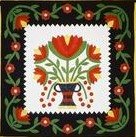
You know size does matter. In quilting and in bust size. When making a quilt, it helps to decide what you want its function to be. For the QOV group, the suggested size is --Your top should be at least 50"x 60". Please don't go larger than a twin sized (63" x 87"). I try to make mine 50" X 70". If I am making a baby quilt for a friend or relative, then it will vary, 36" X 48" or maybe 45" X 60".


When I am talking to a woman about breast size, the question is often what size should I be? We (she and I) may be deciding how much larger (an augmentation) or how much smaller (a reduction) to make her breasts. The deciding factors in my mind are her body type (height, weight, bone structure), her personality (or as good a handle as I can get on it during our time together--I ask them to be honest with themselves about "entering a room bust first"), how they want their clothing to fit. Off the rack clothing is usually sized for a B/C bra cup for the corresponding chest measurement. Anyone fuller busted often has to buy a size larger and then the shoulders may be too large, or safety pin the "gaping buttons" or have clothing custom made. So the augmentations, I try to caution not to go too large (C cup for shorter and up to D for taller women). For reduction patients, I try to caution them not to go too small (some think they want to be A or B cups due to the extreme discomfort they have endured). Most of us women have hips that need C cups to truly balance them, and these women will get the relief they seek in part from the intrinsic lift that comes with a breast reduction. The final say in size is theirs (the patient), but when they ask my opinion I tell them. I am conservative when it comes to breast size. For my taste, bigger is not always better (most of us can not carry off the Dolly Parton look and yet she makes "hers" look good).